
 English
  Español
  Français
 Stable, steady motor performance – High-quality cast construction with precision winding for reliable operation.
Durable, wear-resistant build – Highly resistant to scratches, tears, and impact for long service life.
Fast, convenient draining – Easy-to-open/close drain assembly ensures quick discharge and simple maintenance.
Easy media handling – Media discharge door allows fast adding and removal of media with minimal effort.


Inovatec Machinery Your Best Metal Burnishing Machine Manufacturer in China
The ball burnishing machine manufactured by Inovatec Machinery is suitable for a wide range of mass finishing applications. When used with steel ball media, it increases burnishing efficiency and delivers a smooth, high-gloss surface in a short cycle.
Built for industrial use, the machine features a heavy-duty structure designed to handle high loads reliably. Its fully vibratory operating principle ensures stable processing and efficient media utilization—so after a typical 10–20 minute cycle, you achieve a clean, bright, and glossy finish with minimal loss of steel media.
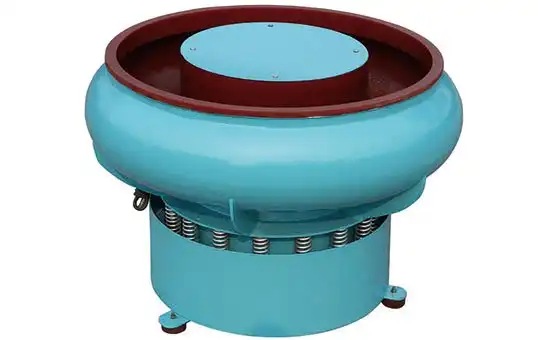
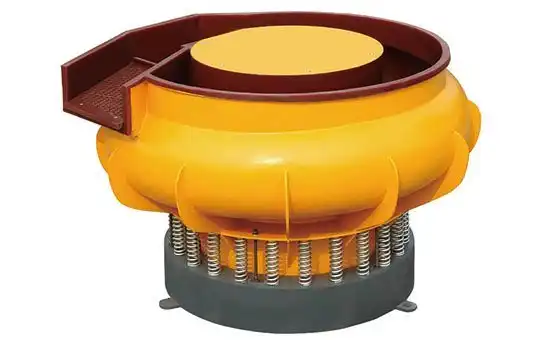
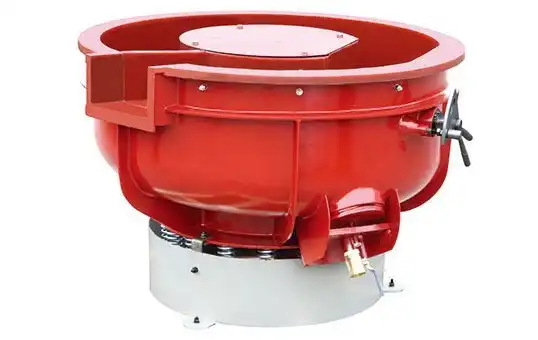
This model features straight sidewalls and an integrated automatic separation system, making it highly efficient for deburring and finishing loose, bulk parts. It is also well-suited for rust removal, edge/radius smoothing (removing sharp edges), and descaling on plastic and other compatible materials.
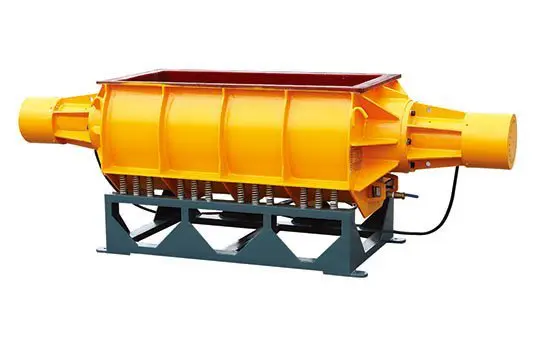
These machines share many design and performance characteristics with the TVB(B) model. The tub ball burnishing machine is suitable for deburring, finishing, and polishing, and it can handle heavy workpieces similar to TVB(B).
In addition, this model offers greater flexibility for processing more complex or larger components such as engine housings, ceramic-coated headers, and exhaust pipes, helping you achieve consistent results across a wider range of part shapes and applications.
Optional Design & Setting
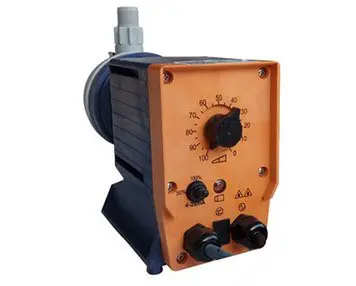
This german dosing pump comes with a meter and is attached to a burnishing machine and other finishing devices. As a result, it accurately shows you just how much polishing liquid is being fed into the machine.
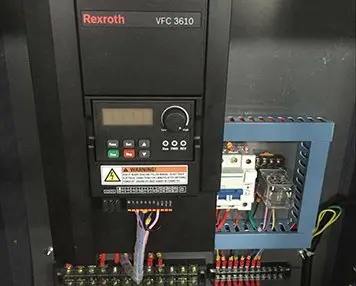
The Bosch Rexroth VFC3610 is a speed-controlling system. It measures and controls the vibration amplitude of finishing equipment. However, you can make the best of it when used with a rolling or tumbling machine.
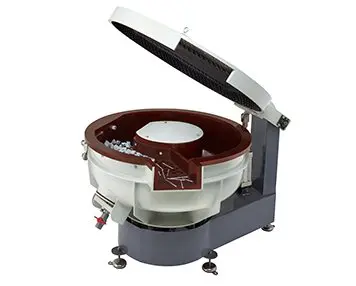
Is the machine too loud? The acoustic sound cover effectively gets rid of any airborne or structure-borne noise in a vibratory burnishing machine. It serves as a cover to the machine. This also allows for operator protection from any chemical splashes.
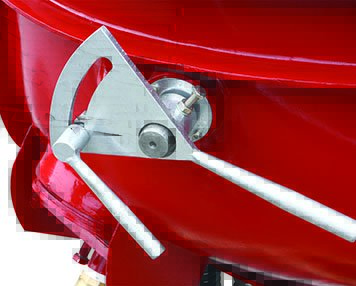
The manual separation handle allows for easy, hand-operated removal of media and other parts from finishing machines (hence the name). This energy-saving design is both easy to handle and separate. Also, it’s very quick in removing media from the machine.
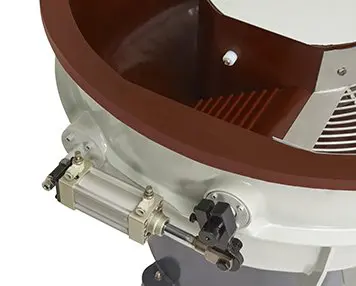
The Airtec separation gate is a lever that goes directly on finishing equipment. The gate allows for PLC Programmed Control. In simpler words, it controls the time needed to remove media or other parts from a finishing machine.
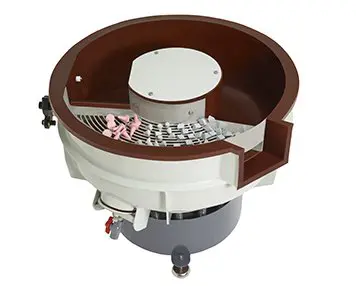
The reverse separation tool easily and very smoothly removes additional parts from finishing machines. However, this separation device is suitable for large-sized media and smaller parts.
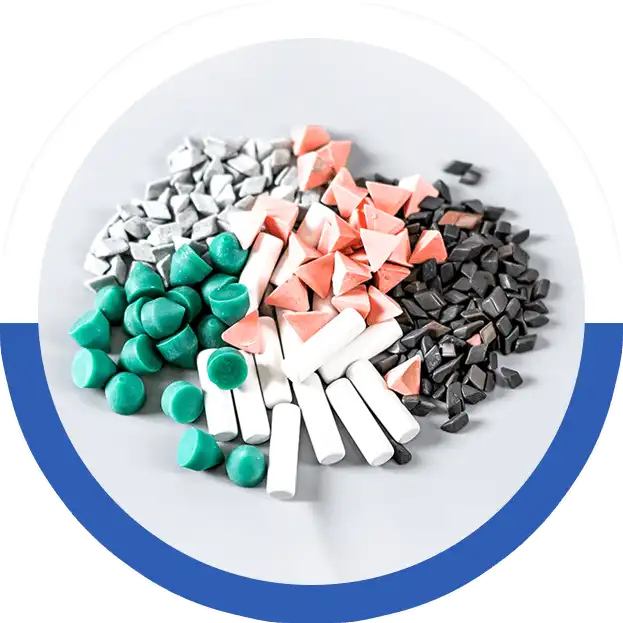
Tumbling Media
Inovatec Machinery manufactures a full range of tumbling media to support different finishing requirements, including plastic media, ceramic media, stainless steel media, high-density media, and organic media. All media is produced under strict manufacturing and quality-control standards to ensure consistent size, shape, and performance.
With high-quality media, you can achieve a faster cycle time and a more consistent surface finish, improving productivity while maintaining reliable results.

Adjustable speed control: Motor speed can be set from 900 to 1500 rpm to match your parts, media, and finishing requirements.
Versatile finishing capability: Suitable for pre-plating finishing, surface refinement, and edge radiusing across a wide range of applications.
Free pre-sales sample testing: We provide sample processing trials and recommend the best media/compound solution before purchase.
Lifetime support: Lifetime technical support and long-term availability of spare parts for reliable, worry-free operation.
- Factory
- Before and After

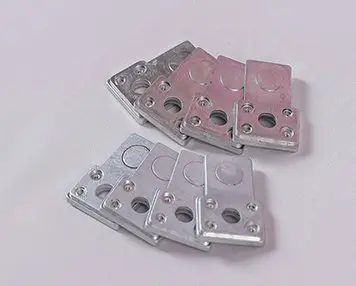
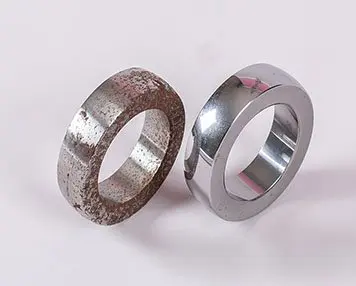
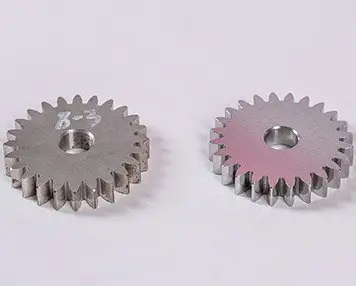
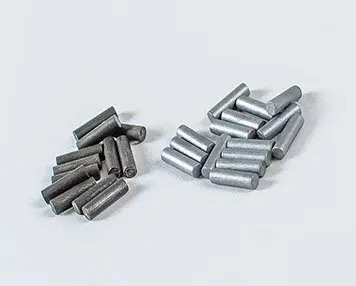
The Least order quantity is 1 pcs.
We make wooden box to protect the ball burnishing machine during the sea shipment.
Our nearest port is Shanghai Ningbo and Yiwu. We can ship to other locations that you prefer.
Yes, we offer free sample processing. You can send your parts to us and we do free parts testing for you. After the ball burnishing process, we will take the photo and video for the whole process. And then send the parts back to you for checking.
You can come to our workshop to check the machine performance in person. You can also ask someone to check it for you. We will cooperate and make the machine running.
Ball Burnishing Machines Introduction
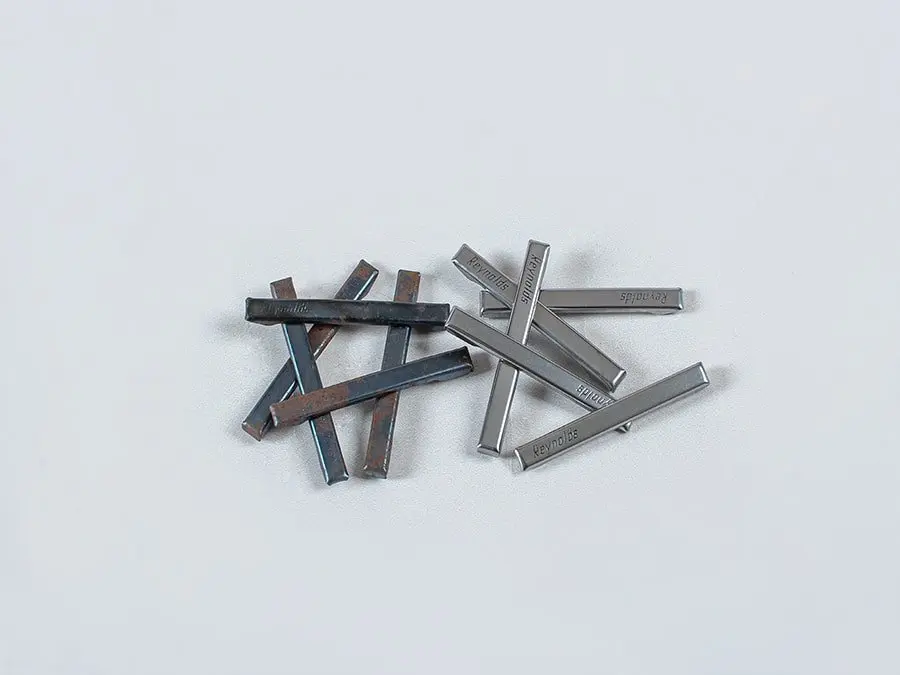
Burnishing machines usually use stainless steel media.
However, many operators also use zirconia balls, carbon steel pieces, and other materials as burnishing media.
The ball burnishing machines do not remove any metal upon contact. It is simply vibratory and non-abrasive. As a result, you will get a smooth and polished media with minimal to no impact.
The compound used for ball burnishing is an actively acidic chemical.
It is regularly fed to the burnishing bowl at a steady pace.

Inovatec ball burnishing machines are very cost-effective and provide high-quality results in a very short amount of time.
A metal burnishing machine is further categorized into the following types..
Inovatec Machinery carries machines in all sizes, from big to small.
Also, the machines can be used to burnish big parts and small parts. Inovatec Machinery has equipment that will suit all of your needs.
The machine can be applied to many different parts, such as dies casting parts, Zamak die casting parts, and metal stamping parts.

While the process is in order, stainless steel exerts great strength onto a media’s surface.
Similar to other mass finishing equipment, burnishing machines come with optional designs and settings. For example, separation handles, dosing pumps, sound covering, and even pneumatic separation gates.
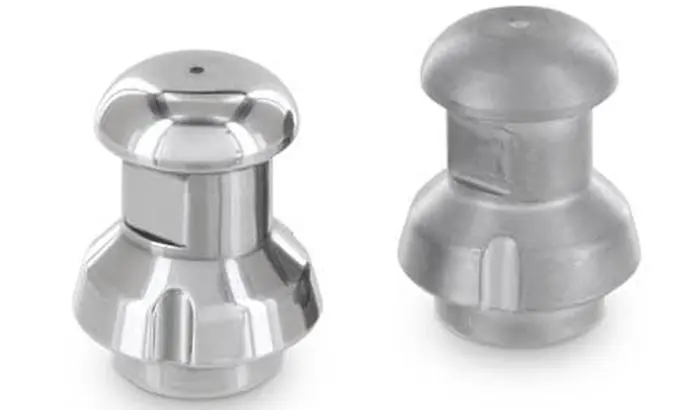
Inovatec Machinery has been manufacturing and designing mass finishing equipment for the past two decades.
To add, you can send them your parts for a free trial. All you need to do is contact them and get a quick quote!
Ball Burnishing Machine FAQ Guide
- 1. What is the architecture of a Ball Burnishing Machine?
- 2. What are the components of a ball burnishing machine?
- 3. What are the most accepted types of ball burnishing media?
- 4. How does a ball burnishing machine work?
- 5. What are the benefits of using a ball burnishing machine?
- 6. Are there different types of ball burnishing machines?
- 7. What is the difference between a Roller Burnishing and a Ball Burnishing Machine?
- 8. Which materials can we insert in a ball burnishing machine?
- 9. What industries can take advantage of a ball burnishing machine?
- 10. Can you achieve better results than other mass finishing machines by using a Ball Burnishing Machine?
- 11. Will there be any negative effects of using a Ball Burnishing Machine on a product?
- 12. Does burnishing speed affect workpieces?
- 13. Does the ball burnishing machine use lubrication? If yes, of what type?
1. What is the architecture of a Ball Burnishing Machine?
In a ball burnishing process, the workpieces are loaded into the machine together with burnishing media. The machine’s vibratory action circulates the load, allowing the media to continuously contact the surface and smooth out micro-roughness, producing a bright, reflective finish.
Each workpiece can be processed with a tailored recipe based on factors such as part weight and geometry, media type and weight, and the compound used. By optimizing these parameters, you can achieve the desired shine, texture, brightness, and color tone, resulting in a consistent finish that meets your specifications.

2. What are the components of a ball burnishing machine?
A ball burnishing machine consists of three main components:
1) The Machine
This is the equipment itself—typically including the tub or finishing chamber, internal lining, drive system, and other structural components that enable the burnishing action.
2) The Compound
The compound is a liquid solution added during processing. It helps clean the surfaces, reduce friction, and protect both media and parts—minimizing corrosion, staining, or surface irritation while improving consistency.
3) The Media (Balls)
The burnishing media—such as steel balls or other burnishing balls—provides the working action. As parts and media circulate together, controlled contact and pressure smooth the surface, resulting in a bright, attractive finish on the workpiece.
3. What are the most accepted types of ball burnishing media?
Ball burnishing machines deliver highly consistent results, producing smooth, bright, and highly reflective surfaces with excellent repeatability.
They are typically operated with steel media or other high-bulk-density burnishing media, because higher mass and contact pressure improve surface compaction and brightness. In addition, these media types are durable and cost-effective, allowing manufacturers to achieve premium-quality finishes at a low cost per part.

Burnishing machines are available in a wide range of shapes and sizes, designed to promote smooth circulation and minimize the risk of parts getting lodged during processing.
Unlike abrasive finishing systems, burnishing chambers and media are non-abrasive and smooth, focusing on surface compaction rather than material removal. This gentler contact helps reduce impact on the workpiece, lowering the risk of surface damage while still producing a bright, polished finish.
4. How does a ball burnishing machine work?
This is how a ball burnishing machine works:
A ball burnishing machine works through a controlled, repeatable cycle:
First, the burnishing media is loaded into the finishing chamber. High-density media—such as steel balls—is selected to achieve the required surface brightness and consistency. The chamber is supported by springs and driven by the motor system. Once the machine starts, the chamber vibrates in a controlled motion, causing the media and workpieces to circulate continuously. Through this rolling contact, the media smooths the surface and produces a bright, reflective finish.
After the cycle is complete, the machine opens for unloading. The parts are separated from the media—typically with an integrated separation system. The media is returned to the machine for reuse, while the finished parts are removed and spin-dried (or dried using another suitable drying method) before moving to the next process.
5. What are the benefits of using a ball burnishing machine?
Corrosion Resistance
Ball burnishing smooths the surface by reducing micro-scratches and surface irregularities. A smoother surface is less likely to trap moisture and contaminants, which helps improve corrosion resistance and supports a longer service life of the finished part.
Surface Work Hardening (Case Hardening Effect)
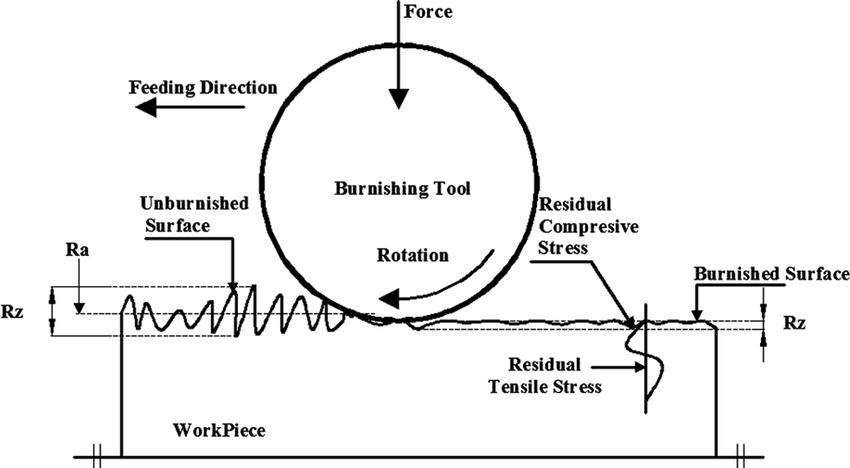
Burnishing is a cold-working process that compresses the surface layer and increases surface density. This creates a work-hardened surface that improves wear resistance and durability. Depending on the material and process settings, the surface hardness can increase significantly, helping the part resist damage during use.
High-Gloss, Polished Finish
Ball burnishing produces a bright, reflective appearance by smoothing fine surface defects. With the correct media and compound, the process can achieve very low surface roughness—often reaching Ra values around 1 μm or better, depending on the material, geometry, and initial surface condition.
6. Are there different types of ball burnishing machines?
No, these are the only types of burnishing machines.
7. What is the difference between a Roller Burnishing and a Ball Burnishing Machine?
Yes—there are clear differences between ball burnishing and roller burnishing, mainly based on the burnishing tool and how it contacts the workpiece.
Ball Burnishing
Ball burnishing uses one or more hardened spherical balls as the working tool. The ball is typically supported by a spring or hydraulic pressure, and a continuous flow of lubricant/compound helps reduce friction and control heat. As the ball rolls over the surface, it plastically deforms and compresses the top layer, smoothing out micro-peaks and improving surface finish.
Roller Burnishing
Roller burnishing uses a cylindrical roller tool (often combined with hardened elements) that presses against the surface as it moves. The roller applies stable, uniform pressure along a line of contact, which helps remove surface irregularities and produce a consistent finish across the workpiece.
Key Practical Differences
Contact type: Ball = point contact; Roller = line contact (often higher productivity on flat/round surfaces)
Best for: Ball is flexible for complex contours; Roller is excellent for shafts, bores, and cylindrical parts
Result: Both can improve finish and induce surface work hardening, but tool choice depends on geometry, accessibility, and required cycle time.

8. Which materials can we use in a ball burnishing machine?
Ball burnishing machines may use many different types of materials in different areas of work.
However, stainless steel ball, zirconia ball and porcelain ball is the most frequently used media.

9. What industries can take advantage of a ball burnishing machine?
Burnishing machines are used worldwide across a wide range of manufacturing sectors. Many industries rely on burnishing to improve surface finish, increase consistency, and enhance part appearance and performance.
That said, the most common applications are in die casting and metal stamping, where high-volume parts often require fast, repeatable finishing. Other major users include tool and die shops, foundries, and the aluminum casting industry, along with many additional metalworking and precision manufacturing operations.

10. Can you achieve better results than other mass finishing machines by using a Ball Burnishing Machine?
No, it is not.
Ball burnishing machines achieve the same result, but with a different process.
And this purpose remains the same in every other industry.

11. Will there be any negative effects of using a Ball Burnishing Machine on a product?
12. Does burnishing speed affect workpieces?
The ideal burnishing speed depends on your target result and the specific part/media combination. If your goal is a very smooth, bright finish—or you need faster cycle times—speed becomes a critical factor.
In general, higher speed increases contact frequency and energy, which can improve smoothing and brightness. However, this is not universal. For some parts and media types, running too fast can cause impacts, marking, or instability—meaning a lower speed may produce a smoother, more consistent finish.
The best approach is to set speed based on:
Part material and geometry (thin/fragile parts often prefer lower speed)
Media type/size and load ratio
Required finish level (brightness vs. gentle smoothing)
Compound and lubrication conditions
With the right balance, you’ll get the desired smoothness without over-processing.
13. Does the ball burnishing machine use lubrication? If yes, of what type?
Yes—ball burnishing typically uses a lubricant, often called a burnishing compound.
The compound is usually fed continuously during operation to improve process stability and finish quality. It helps to:
Reduce friction and impact between media and parts
Prevent surface scratching and abrasions
Support faster, more consistent burnishing
Keep parts and media cleaner during processing
With the correct compound selection and flow rate, the burnishing process becomes smoother, quicker, and more reliable.