☎ +86139 0672 0286 | 📍 Huzhou, Zhejiang, China | ✉ [email protected]
15+ Years · 1,000+ Customers · 60+ Countries Served

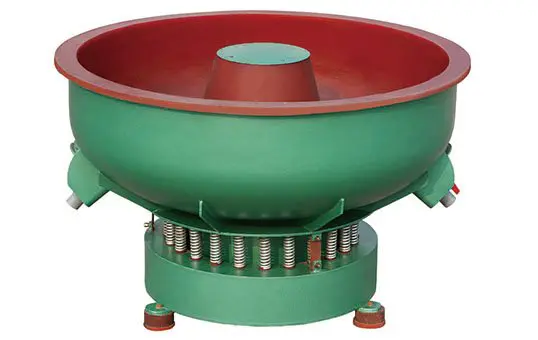
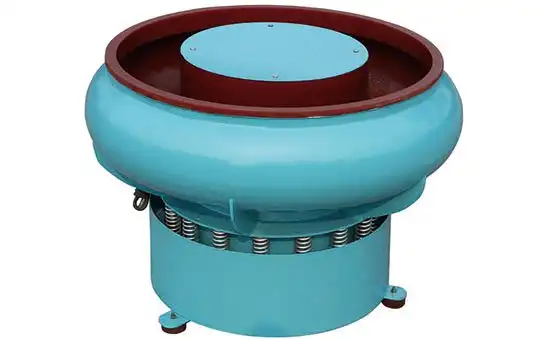
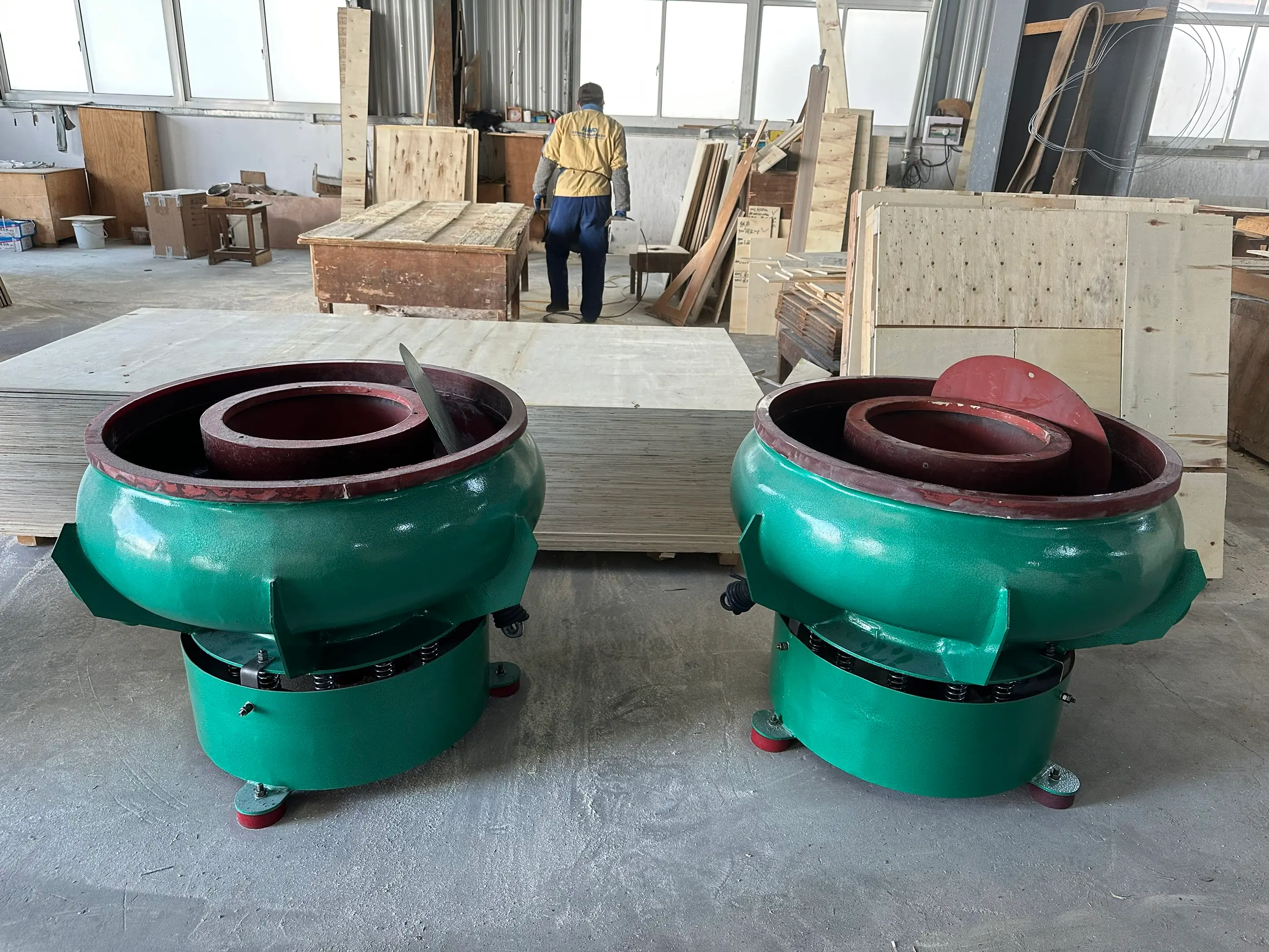
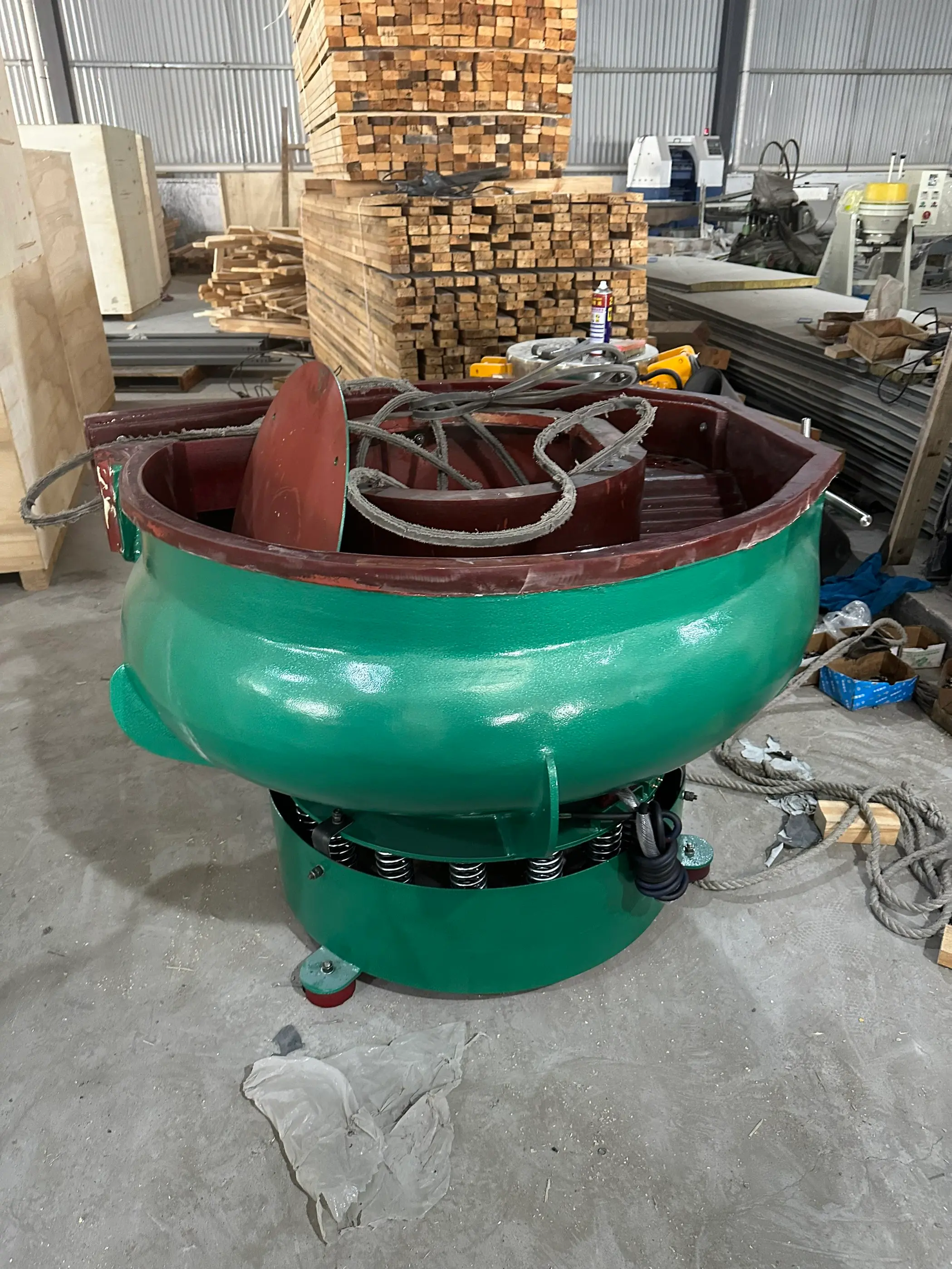
Industrial Vibratory Tumbler VBS(A) for Metal Finishing Inovatec Machinery

Capacity: 100 / 200 / 260 / 580 / 820 L Core design: curved PU-lined bowl + spiral bottom Separation: integrated separation sieve (adjustable holes) Options: sound cover, dosing pump, pneumatic shutter, VFD

Ask an Engineer
Inovatec Machinery vbsa vibratory finishing machine with curved wall bowl mass finishing machine deburring and polishing
Price: $4800 Stock: 10 units

Inovatec Machinery · Vibratory Finishing

Performance & Quality of Industrial Vibratory Tumbler

Inovatec’s Industrial Vibratory Tumblers give smooth surface finishes, fast deburring, and reliable results for every batch. Below is real performance data and before-and-after comparisons from our industrial customers.

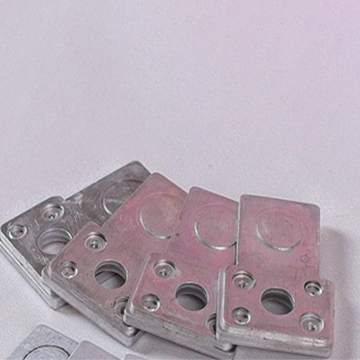
Aluminum Parts Before and After Tumbling

Aluminum Parts Before and After Tumbling - Before Aluminum Parts Before and After Tumbling - After Before After
Ra Before 0.8 μm roughness
Ra After 0.3 μm roughness

Process Specs

Parts Material Aluminum Machining Parts
Processing time (min) 40 minutes
Media Type Plastic Media 600# 20X20mm (3/4 inch)
Media Wear Rate 0.3% per hour
Material Removal < 0.15%
Consistency ±1% Surface Uniformity

Full Process Specifications

· Aluminum Parts Before and After Tumbling
Parts Material
Processing time (min)
Media Type
Media Wear Rate
Ra before
Ra after
Material Removal
Consistency
Aluminum Machining Parts
40 minutes
Plastic Media 600# 20X20mm (3/4 inch)
0.3% per hour
0.8
0.3
< 0.15%
±1% Surface Uniformity

Key Advantages in Performance & Quality

Key Advantages
  • Consistent Results: Our industrial vibratory tumbler maintains the same surface finish quality from batch to batch, delivering stable results for mass production.

  • Low Damage Rate: Controlled vibration and proper media selection allow the industrial vibratory tumbler to reduce part-to-part contact, making it suitable for small or delicate components.

  • High Repeatability: With digital controls and easy program settings, the industrial vibratory tumbler can keep cycle-to-cycle variation within ±1% under identical process conditions.

  • Real Industrial Testing: Verified through 1,000+ finishing tests across different metals, geometries, and part sizes.

  • Process Tracking: Each industrial vibratory tumbler can record cycle time, media type, and vibration parameters for simple quality control and repeatable production.

Technical Specifications

Explore the detailed specifications of our VBS(A) Series Industrial Vibratory Tumblers. Compare models by capacity and performance, and download the full technical documentation.

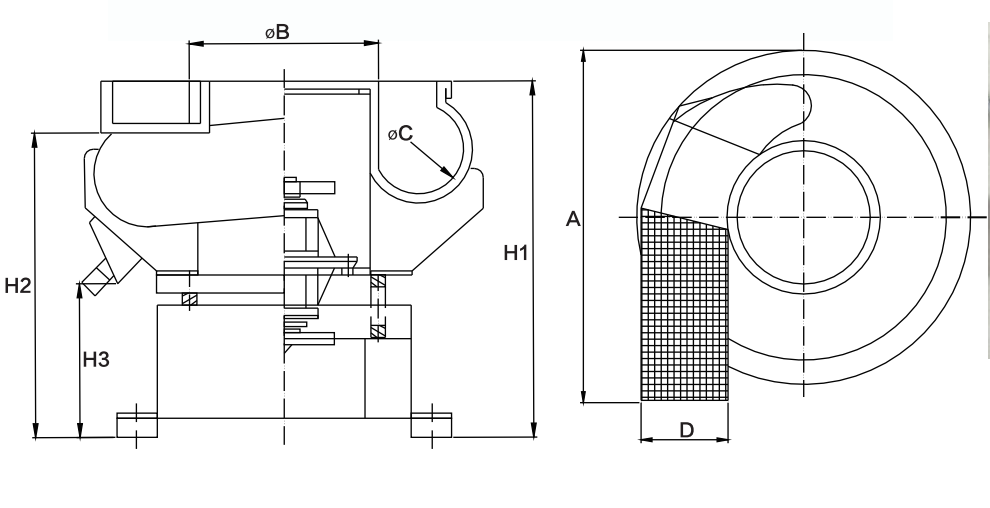
VBS(A) industrial vibratory tumbler drawing
ModelVBS(A)100VBS(A)200VBS(A)300VBS(A)600VBS(A)900
Total volume(L)100200260580820
Max overall dimension(mm) A9801060128618002100
Motor installation tube(mm) Bφ470φ530φ630φ900φ1060
Process bowl width(mm) Cφ220φ252φ264φ390φ445
Unload width(mm)250266287430450
Machine height(mm) H188094092012001500
Unload height(mm) H27607807609601220
Media unload height(mm) H3290360260410550
Motor(kw)1.5/2.23.03.7/5.05.5/7.511.0
Weight(kg)28046060015002470

Key Features & Benefits

Looking to buy an industrial vibratory tumbler? Our machines range from 100L to 820L. As a leading supplier of mass finishing equipment and consumables, we’ll help you choose the right setup. Get a free quote today.

Our industrial vibratory tumbler delivers higher-efficiency finishing thanks to its curved bowl design. The curvature increases contact pressure between parts and media, helping achieve faster, more consistent results. It also reduces part-to-part sticking and prevents workpieces from adhering to the PU lining. A spiral bottom with a gradual incline maintains a stable, even mass depth throughout the finishing cycle.

⚡

Curved Bowl + Spiral Bottom Design

The VBS(A) uses a curved-wall bowl with a spiral inclined bottom — the key structural difference from straight-wall machines. The curved wall increases the contact pressure between parts and media, producing faster, more consistent surface results than a flat-wall equivalent. The spiral incline maintains uniform mass depth throughout the finishing cycle, preventing parts from pooling in one section and ensuring all surfaces receive equal media exposure. The 3D toroidal media flow this geometry creates is also what enables ball burnishing — a process that is not effective in straight-wall bowls.

  • Curved wall increases media-to-part contact pressure — faster, more consistent results
  • Spiral bottom maintains uniform mass depth — prevents parts pooling unevenly
  • 3D toroidal flow enables ball burnishing with steel pins or porcelain media
⚡

Dow Chemicals PU Lining, Integrated Separation Sieve

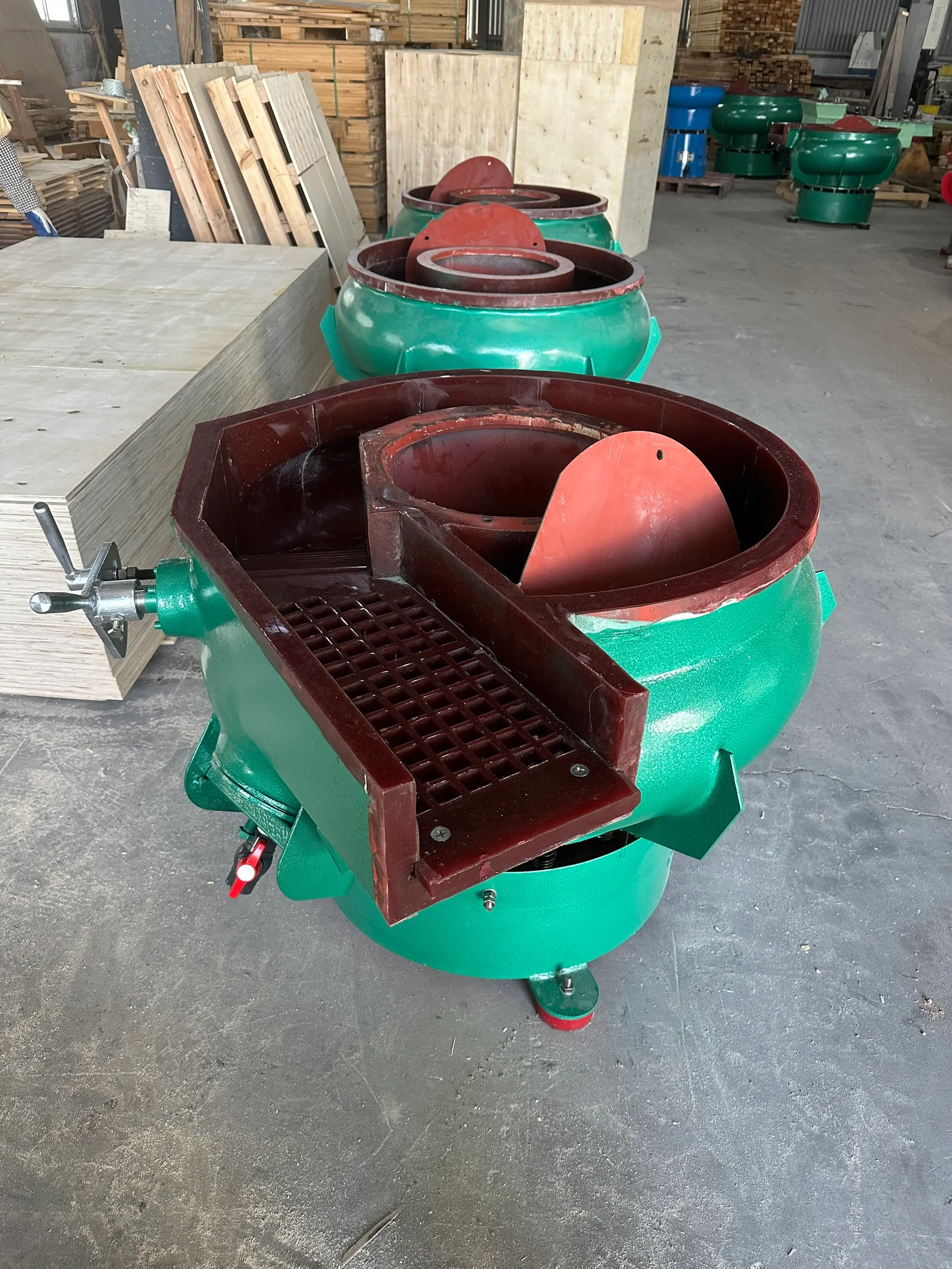
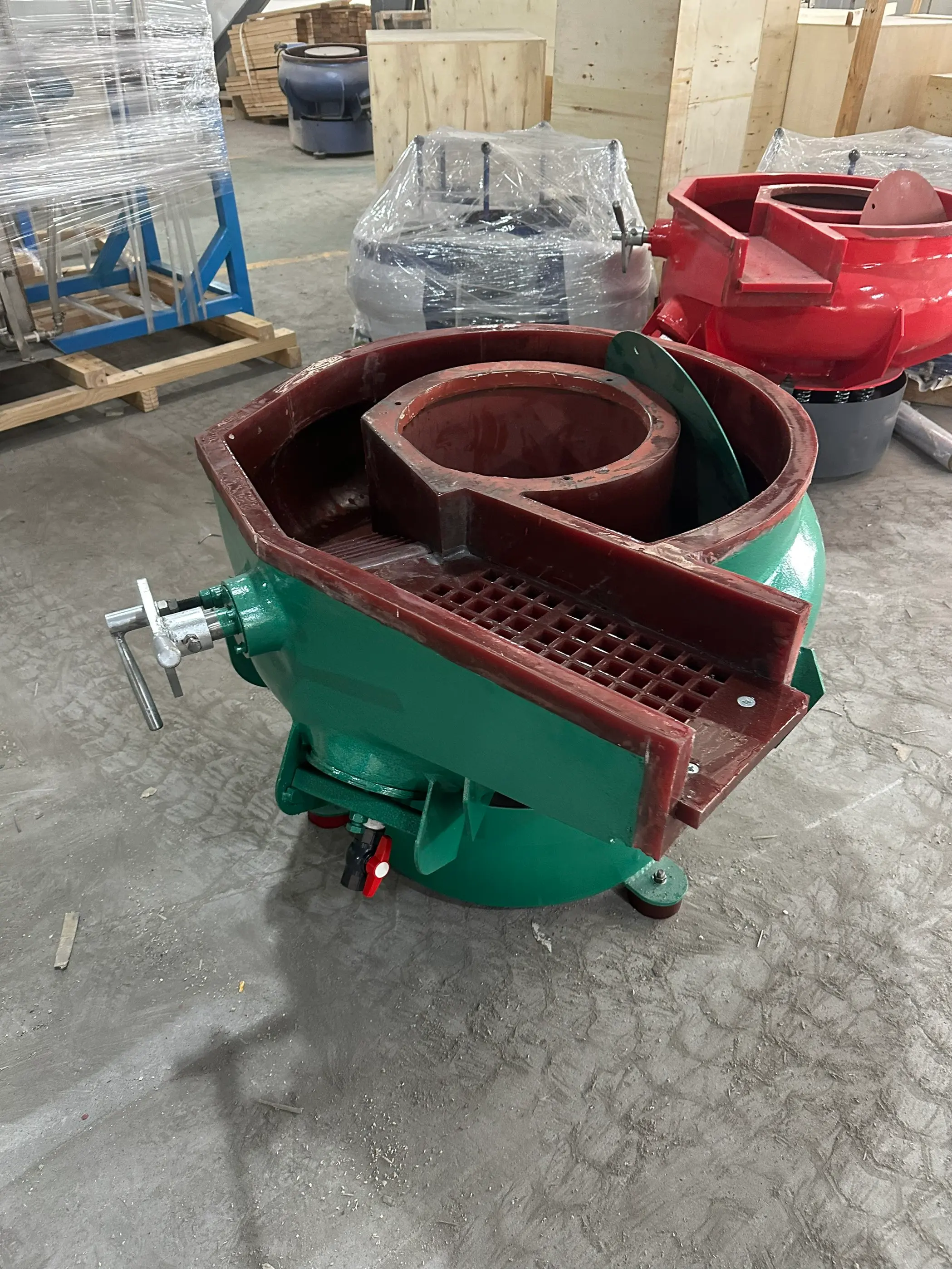
The bowl is lined with hot-poured polyurethane from Dow Chemicals (USA) raw material, cured at controlled temperature for 24 hours. The integrated separation sieve is built into the bowl discharge — when the gate opens, parts and media discharge together onto the sieve, which retains parts and passes media through automatically. Sieve hole size is adjustable to match different media shapes and sizes, eliminating the need for an external separator in most standard applications.

  • Hot-poured Dow Chemicals PU lining — wear-resistant, 5+ year service life
  • Integrated separation sieve — automatic in-machine parts/media separation, no external unit needed
  • Adjustable sieve hole sizes — configured to match your specific media shape and size
⚡

5 Model Sizes, 100 L to 820 L

The VBS(A) is available in five bowl sizes from VBS(A)100 (100 L, 1.5–2.2 kW) to VBS(A)900 (820 L, 11 kW). Model selection is primarily driven by batch volume: VBS(A)100–200 suit small workshops and prototype batches; VBS(A)300 is the standard general-purpose choice for job shops; VBS(A)600–900 are production-line machines for automotive and hardware manufacturing. Optimal load is 70–80% of bowl volume — parts and media combined. All models accept the full range of optional accessories: sound cover, dosing pump, pneumatic shutter and Bosch Rexroth VFD.

  • Five sizes from 100 L to 820 L — single machine family from workshop to production line
  • Optimal load 70–80% bowl volume — parts + media combined
  • All models compatible with sound cover, dosing pump, pneumatic shutter and VFD

VBS(A) Industrial Vibratory Tumbler — Product Overview

The VBS(A) is the spiral bowl model in the Inovatec vibratory finishing range — the structural choice for ball burnishing and high-luster polishing as well as standard deburring and cleaning. Its curved wall and spiral bottom produce 3D toroidal media flow, which means higher contact pressure, better coverage of complex part geometries, and the rolling media action needed for effective ball burnishing with steel pins or porcelain media. Choose VBS(A) when your process includes ball burnishing, when you need high-luster output, or when your parts have internal features that benefit from 3D media flow. Choose VBS(B) or VB(B) when your primary requirement is deburring of large or heavy parts in a straight-wall bowl.
We have integrated extended separation sieve into the tumbler bowl, allowing the tumbling media and workpieces to separate inside the machine. You can also adjust the separation sieve holes size as per the tumbling media size and shape.

Hot-poured PU and a heavy-duty vibration motor are the primary components in our high-end industrial vibratory tumblers. We make our polyurethane using raw materials sourced from Dow Chemicals, USA.

We use an automatic casting machine to solidify the PU, then cure it at a controlled temperature for 24 hours. We use heavy-duty motor from Shanghai Vibration Co. With proper maintenance, it can last more than five years.

Surface finishing process

Watch our Surface finishing process in action. Learn more about our Surface finishing process technology.

Get More Information

Key Applications

Our mass finishing machine and tumbling media serve diverse industries with specialized finishing solutions for various materials and part types.

🚗

Automotive

Engine components, transmission parts, brake systems

✈️

Aerospace

Turbine blades, landing gear, structural components

🔧

Hardware

Fasteners, connectors, precision tools

🖨️

3D Printing

Post-processing, surface refinement, finishing

Why Choose Inovatec mass finishing machine and tumbling media?

Inovatec Machinery stands out as a trusted partner in surface finishing solutions, offering unmatched quality, innovation, and customer support.

🏆

20+ Years of Industry Experience

Since 2003, we've been at the forefront of surface finishing technology, continuously innovating and improving our solutions based on real-world manufacturing needs.

🎯

Custom Solutions for Your Specific Needs

We understand that every application is unique. Our engineering team works closely with you to design and configure machines that perfectly match your requirements.

🌍

Global Technical Support Network

With partners and service centers worldwide, we provide localized support and rapid response times regardless of your location.

⚡

Fast Response Within 24 Hours

We value your time. Our technical team responds to inquiries within 24 hours, ensuring you get the answers and support you need quickly.

💡

Free Technical Consultation

Benefit from our expertise at no cost. We offer complimentary technical consultations to help you optimize your finishing processes and select the right equipment.

✅

Proven Track Record

Over 500 satisfied customers across 50+ countries trust Inovatec for their surface finishing needs, with a 99% customer satisfaction rate.

Application Examples

Explore real applications by industry and scenario, with Before/After, sub‑categories and resources to help you quickly find what you need.

Jewelry Polishing Machine

Jewelry | Precious Metals | Jewelry Polishing

Precision polishing, deburring and mirror finishing for gold, silver, copper and titanium jewelry—balancing premium surface quality with throughput.

Before

Burrs on edges, surface scratches and oxidation spots reduce luster and wearing comfort.

After

Noticeably improved mirror gloss with rounded edges and better wearing comfort.

3D Print Parts Finishing

Additive Manufacturing | SLA/SLS/FDM

Removes layer lines, densifies surfaces and unifies appearance for 3D‑printed parts across materials and processes.

Before

Pronounced layer lines, support marks and rough surface affect assembly and appearance.

After

Smooth, refined surface ready for painting/electroplating; presentation‑grade look.

SLA Photopolymer SLS Nylon Parts FDM ABS/PLA Support Removal & Cleanup

Laser Cut Parts Deburring

Sheet Metal | Laser Cutting | Edge Optimization

Removes dross/burrs and adds edge radiusing on laser‑cut parts to improve safety and assembly quality.

Before

Sharp, burred edges can cause cuts and hinder coating adhesion.

After

Consistent rounded edges and clean surfaces for better paint/e‑coat adhesion.

Thin‑sheet Deburring Stainless Steel Parts Carbon Steel Parts Aluminum Edge Radiusing

Consumer Products Finishing

Consumer Electronics | Small Appliances | Exterior Parts

Delivers consistent texture and feel for high‑volume consumer products, improving brand perception and yields.

Before

Uneven brushing, micro‑burrs and harsh feel affect assembly and user experience.

After

Uniform texture, smooth edges and refined touch; markedly better consistency.

Stone Tumbling Machine

Stone | Gemstone | Tumbling

Rounds edges and enhances gloss on natural/synthetic stones for jewelry and decorative crafts.

Before

Sharp edges, rough surfaces and uneven color/reflection.

After

Rounded edges and even polish; improved visual appeal.

Automotive Parts Finishing

Automotive | Engine/Drivetrain | High‑volume Consistency

Deburring, edge radiusing and surface consistency for automotive parts to meet stringent standards.

Before

Tool marks and residual burrs with sharp edges reduce fatigue strength and hinder assembly.

After

Stable edge radii and compliant roughness with high repeatability.

Military Product Finishing

Defense | High Reliability | Process Consistency

High‑reliability, consistent surface finishing across metals and composites.

Before

Sharp edges, stress concentrations and surface defects impact durability and safety.

After

Consistent chamfers and stable surface quality; coating/assembly‑ready.

Aluminum Mass Finishing

Aluminum Profiles | Die‑cast Parts | High‑volume Finishing

Efficient, consistent finishing for aluminum parts; ideal for pre‑anodizing treatment and brushed/polished appearance.

Before

Gate/flash marks and dull surfaces; notable batch variation.

After

Flash removed with refined texture and higher brightness; improved batch consistency.

Plastic Deflashing Machine

Engineering Plastics | Injection‑molded Parts | Deflashing

Removes plastic flash and smooths edges to prevent scratching and improve assembly.

Before

Visible flash and sharp edges affect feel and assembly.

After

Flash removed and corners smoothed; improved look and feel.

ABS/PC Housings Nylon Parts Cleanup Thin‑walled Parts Protection

Optional Accessories

Enhance your mass finishing machine and tumbling media with our professional-grade accessories. Increase efficiency, reduce noise, and optimize your finishing process.

Sound Cover

  • Noise cover to reduce noise from 95 db to 70 db
  • Airtec cylinder for safety lock
  • Protect worker from loud noise

Pneumatic Shutter

  • Airtec  Cylinder Control
  • Separation from media and parts
  • Easy to control when a finishing cycle ends

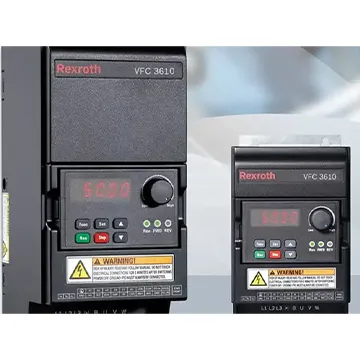
Variable Speed Converter

  • Bosch Rexroth Speed Converter
  • Vibration Amplitude Control
  • Easy to program

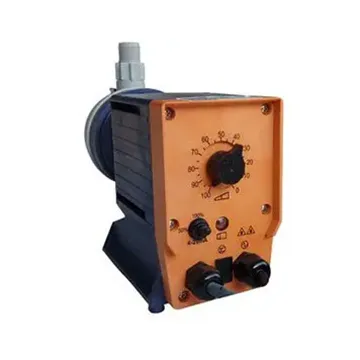
Prominent Dosing Pump

  • Water and chemical continuous flow
  • For better parts shining and cleaning
  • German Brand Prominent

Complete Solution Package

Get the most out of your mass finishing machine and tumbling media with our comprehensive accessory package. Our experts will help you select the right combination of accessories for your specific application needs.

🎯

Optimized Performance

Accessories designed to maximize machine efficiency and output quality

💰

Cost Savings

Reduce operational costs through improved efficiency and reduced waste

🛠️

Easy Integration

All accessories designed for seamless integration with your existing machine

Certification & Global Trust

Inovatec Machinery is committed to the highest standards of quality, safety, and reliability.

🏆

ISO 9001:2015

Quality Management System certified by international standards, ensuring consistent product quality.

Certification Body: SGS
✅

CE Certification

European Conformity marking ensuring our machines meet EU safety standards.

Directive: 2006/42/EC
🔍

SGS Test Report

Comprehensive testing and inspection reports from SGS.

Test Type: Performance & Safety
🌱

RoHS Compliance

Environmental protection standards compliance.

Standard: 2011/65/EU

20+ Years of Excellence

Since 2003, Inovatec Machinery has been at the forefront of surface finishing technology innovation.

2003
Company Founded
2008
First International Export
2015
ISO 9001 Certification
2020
500+ Global Customers
2024
Advanced Technology
20+
Years Experience
500+
Global Customers
50+
Countries Served
99%
Satisfaction Rate

Global Presence & Industry Recognition

Our machines are trusted by manufacturers worldwide and recognized at major industry exhibitions.

🏢

Trade Shows & Exhibitions

Regular participation in major industry exhibitions worldwide.

IMTS Chicago Hannover Messe CIMT Beijing
🌍

Global Distribution Network

Strategic partnerships across major manufacturing regions.

North America Europe Asia Pacific

Frequently Asked Questions

Find answers to common questions about our products.

What is an industrial vibratory tumbler?

+

An industrial vibratory tumbler is a mass finishing machine used to clean, deburr, polish, and smooth parts through continuous vibration and friction between media and workpieces.

How to Choose the Right VBS(A) Industrial Vibratory Tumbler

+

Model selection starts with your daily batch volume and largest part dimension:

VBS(A)100 (100 L, 1.5–2.2 kW): prototypes, small batches up to ~30 kg/batch, small hardware and jewelry parts. Suitable for process development before scaling up.

VBS(A)200 (200 L, 3.0 kW): small workshop standard choice, batches up to ~60 kg, general machined parts and die-castings. Most common entry-level production model.

VBS(A)300 (260 L, 3.7–5.0 kW): general-purpose job shop machine, handles most medium-sized parts and mixed batch work. Good balance of capacity and footprint.

VBS(A)600 (580 L, 5.5–7.5 kW): mid-volume production lines, automotive hardware, stamped parts in continuous shift production. Requires more floor space and wastewater handling.

VBS(A)900 (820 L, 11 kW): high-volume production, heavy loads, bulk hardware manufacturing. Typically paired with dosing pump, pneumatic shutter and wastewater centrifuge.

The key sizing rule: parts and media combined should fill 70–80% of bowl volume. Underfilling (below 60%) reduces vibration efficiency and finish consistency; overfilling prevents proper media flow.

How does a industrial vibratory tumbler work?

+

It uses a heavy-duty motor to vibrate a polyurethane-lined bowl, causing the tumbling media to rub against the parts for surface finishing.

What materials can be processed in industrial vibratory tumbler?

+

You can process metal, plastic, ceramic, and even stone parts. It works for both small and large or complex-shaped pieces.

What media should I use for aluminum, zinc, and stainless?

+

Quick answer: Aluminum & zinc → plastic media (safer). Stainless → ceramic for deburring, steel media for high shine.

Aluminum (soft / easy to scratch)

  • For deburring + surface smoothing: plastic media (pyramids/cones) is usually safest.

  • For brightening: use plastic polish media + burnishing compound.

  • Avoid aggressive ceramic on thin/soft parts unless you’ve tested—it can create dings and edge roll.

Zinc / die-cast zinc

  • Typically start with light-cut plastic media for deburring.

  • For smoother surfaces, step to fine plastic or porcelain (if geometry allows).

  • Use a cleaning/brightening compound to reduce smut and improve consistency.

Stainless steel (hard / needs more energy)

  • For deburring and edge rounding: ceramic media (medium to aggressive cut) is most common.

  • For high shine / burnishing: stainless steel burnishing media (pins/balls/diagonals) + burnishing compound.

  • If parts are delicate or thin-walled, use smaller media and lower amplitude to reduce part damage.

Tip: The best media choice depends on part size, hardness, burr size, and target finish (Ra/shine). A quick sample test is the fastest way to lock it in.

How do I choose separation screen hole size?

+

Quick answer: Pick a hole size that prevents part loss AND make sure media pass through

Choose screen holes based on the smallest part dimension and the media size:

  • Rule of thumb (to avoid part loss): hole size should be smaller than the smallest part thickness/width that could pass through.

  • Rule of thumb (to avoid media carryover): hole size should be bigger than your biggest media dimension

  • If you run mixed part sizes, use:

    • a smaller hole screen (safer) + more time for separation, or

    • a two-stage separation (coarse then fine) if available.

Practical example:

ItemMeasureExampleHole size guideline
Smallest part thickness/widthPmin20 mm≤ 0.8 × 20 = 16 mm
Smallest media dimensionMmin10 mm>10 mm
Recommended hole size——Choose the bigger limit → ~15 mm

Wet vs dry vibratory finishing—when to use each?

+

Quick answer: Wet finishing is best for deburring/cleaning consistency. Dry finishing is best for no-water operations and light polishing/drying.

Wet finishing (most common for industrial vibratory tumblers)
Use wet when you need:

  • Faster cutting and better temperature control

  • Cleaner parts (less dust)

  • Better consistency on mixed loads

  • Improved surface quality using compounds (cleaning, rust inhibitor, brightener)

Best for: deburring, descaling, cleaning, general smoothing, and many polishing steps.

Dry finishing
Use dry when you need:

  • No water/effluent handling

  • Very light finishing, drying, or gentle polishing

  • Special applications using dry organic media (e.g., corn cob/walnut shell)

Best for: drying, light polishing, and certain delicate finishing steps.

What’s typical cycle time for deburring vs polishing?

+

Quick answer: Deburring is usually faster than polishing; most shops use a 2-step process (cut/smooth → polish/burnish).

It varies by material, burr size, media aggressiveness, and finish target, but typical ranges:

  • Light deburring / edge break: 15–45 minutes

  • General deburring + smoothing: 45–120 minutes

  • Pre-polish smoothing: 1–3 hours

  • Bright polish / burnishing: 30–120 minutes (often after a deburr step)

Best practice: treat it as a 2-step process (cut/smooth → polish/burnish). That’s usually faster and more controllable than trying to do everything in one long cycle.

How do I reduce noise (sound cover vs installation tips)?

+

Quick answer: A sound cover reduces airborne noise the most; proper foundation and setup prevents vibration amplification.

Sound cover (most effective)

  • A soundproof cover can significantly reduce airborne noise at the source.

  • Best when operating near office areas or for long production shifts.

Installation & setup tips (often overlooked)

  • Place the machine on a solid, level foundation; avoid resonant platforms.

  • Use anti-vibration pads or isolation mounts if appropriate.

  • Keep media/part load within recommended range (over/under loading increases noise).

  • Maintain correct amplitude/speed settings—too aggressive settings raise noise and part damage risk.

  • Check for loose fasteners, worn springs, or a damaged PU lining (they can increase vibration noise).

Can the machine handle sharp parts and prevent part-on-part damage?

+

Quick answer: Yes—use the right media ratio, media size, and gentler settings to keep parts separated.

To reduce part-on-part damage:

  • Use proper media-to-part ratio (insufficient media = parts hit each other).

  • Choose media size that separates parts (small media can “pack” and allow metal contact).

  • Use plastic media for softer parts, or smaller ceramic for controlled cutting.

  • Lower amplitude / gentler settings for thin or sharp-edged parts.

  • Use wet finishing with compound to add lubrication and reduce impact.

If your parts are extremely sharp or delicate, ask for a process recommendation (media shape/size + compound + cycle).

What maintenance does the PU lining need?

+

Quick answer: PU lining lasts long, but routine inspection + correct chemistry prevents premature wear.

PU lining is designed for long service life, but you’ll get more uptime with simple checks:

  • Daily/weekly: rinse and visually inspect for cuts, peeling, or abnormal wear.

  • Avoid sharp scrap and metal burr piles sitting in the bowl—those can gouge the lining.

  • Maintain correct chemical concentration (overly harsh chemistry can accelerate wear).

  • Avoid running dry with aggressive media on sharp parts unless the process requires it.

  • If you see thinning near high-impact zones, plan a scheduled reline before it fails.

Tip: consistent media/compound control reduces both lining wear and cycle time variation.

What is the difference between industrial and benchtop tumblers?

+

Industrial tumblers have larger capacity (100–820 L), stronger motors, and separation sieves for automatic unloading, while benchtop versions are smaller and manual.

How long does the finishing process take?

+

Typical finishing cycles range from 30 minutes to a few hours, depending on material, media type, and desired surface finish.

What are the main advantages of using an industrial vibratory tumbler?

+

Fast processing, large batch capacity, consistent results, durable PU lining, and optional automatic separation features.

How much does an industrial vibratory tumbler cost?

+

Prices usually range from USD 2,000 to 20,000, depending on size, power, and automation level.

Is maintenance difficult?

+

No. Regularly check the PU lining, motor, and media condition. With proper care, the machine can last for many years.

Can it be used for rock tumbling?

+

Yes. Industrial vibratory tumblers can polish stones or rocks quickly and evenly without causing cracks or deformation.

What factors should I consider before buying?

+

Choose capacity, power, space requirement, and budget according to your production volume and finishing needs.

Get Your Free Quote

Ready to improve your finishing process? Contact our experts for a personalized quote and technical consultation.

Request A Free Quote

Fill out the form below and our team will contact you within 24 hours.

Quick Contact Options

Prefer to contact us directly? Choose your preferred method.

📱

WhatsApp

+8613906720286

📧

Email

[email protected]

💬

WeChat

YNW68686

📞

Phone

+86-13906720286

Connect With Us

Ready to experience the Inovatec difference? Contact our team for personalized solutions.

📞

Phone

+86-13906720286

Call Now
📍

Address

399# Shushan Road, Wuxing District, Huzhou City, Zhejiang Province, 313000 China
6317 Arcadia St, Eastvale, CA 92880 USA (323-577-3309)

View on Map