
 English
 Español
 Français
 Русский


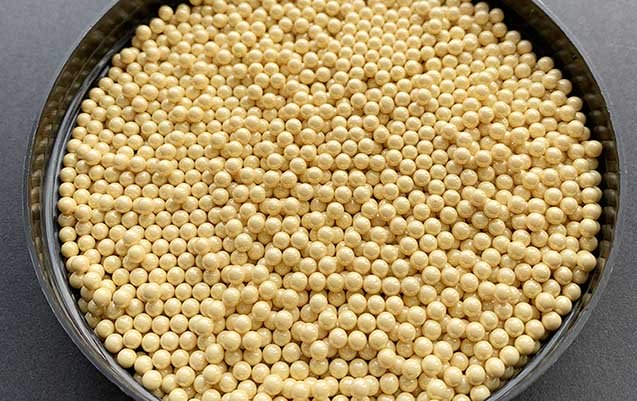
Zirconia Ball
- Description
- Feature
- Applications
Yttrium-stabilized zirconia grinding media is used to make a zirconia ball. It is a long-lasting and contamination-free finishing media. It is the best tumbling media for ball milling and attrition milling applications, especially for ceramic materials. It is also suitable for the wet grinding process in high-velocity conditions.
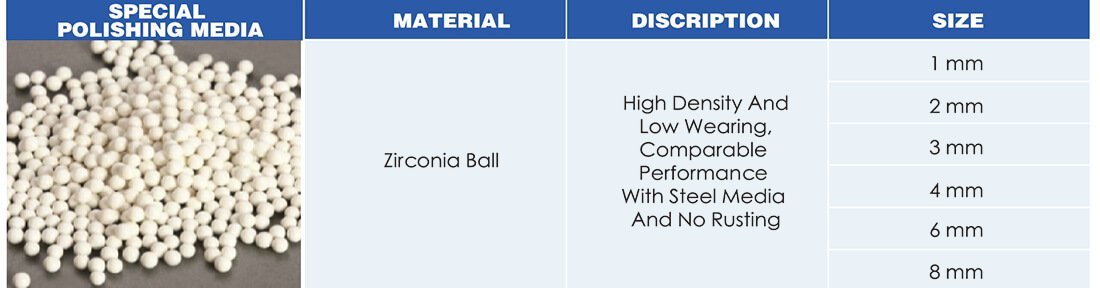
It provides a better size distribution. It also offers better wear resistance and more delicate internal crystal structure compared to any other finishing media. As a result, zirconia balls are a credible alternative to stainless steel media.
Inovatec offers both, zirconia balls and zirconia-alumina composite balls with a specific gravity of 2.70, 3.2, 3.80, 4.0, 5.0, and 6.0 which are suitable for almost all applications.
Advantages
• Yttrium-stabilized zirconia (YSZ) material, toughened by Yttrium element, results in Ultra-low attrition rate.
• Its high density leads to better grinding efficiency.
• Zirconia ball, being durable, saves the operational cost in the long run.
Applications
• Mineral ore fine grinding
• Electronic-grade ceramics and ceramic ingredient fine grinding
• Nano-material and superfine powder grinding
• Inks, dyes, paint, and pigments milling
• Pharmaceutical, chemical, and pesticide mixing
• Lab ball mill, jar mill, desktop planetary ball mill
• Dental and jewelry polishing
• Lithium battery slurry grinding and milling
- No rusting
- Ultra-low wear loss
- High grinding and polishing performance
- The most durable material, reducing operational cost in the long run
- Suitable for high -speed operations
- Replace steel tumbling media
- Silver and gold polishing
- Electric parts polishing
- Grinding and Milling
Related Products


Inovatec zirconia bead range — which grade is right for your application?
Inovatec manufactures four grades of zirconia grinding and milling media. They differ in zirconia content, density, wear rate and cost. This table is the starting point for selecting the correct grade before you go to the individual product pages.
| Grade | ZrO₂ content | Real density | Wear rate | Best for | Relative cost |
|---|---|---|---|---|---|
| Yttria Stabilized (YSZ) 95% ZrO₂ + 5% Y₂O₃ | 95% | 6.05 g/cm³ | 0.01 kg/h per ton — ultra-low | Pharmaceutical, lithium battery slurry, electronic ceramics, pigments — anywhere contamination tolerance is near zero and long media life is essential | Highest |
| Ceria Stabilized (CSZ) ~80% ZrO₂ + CeO₂ | ~80% | ~6.0 g/cm³ | Low | High-speed bead mills, fine grinding where impact toughness matters; slightly lower cost than YSZ for similar performance tiers | High |
| Zirconium Silicate (ZS) ~65% ZrO₂ + SiO₂ | ~65% | ~3.8–4.0 g/cm³ | Moderate | Paints, inks, coatings, general chemical dispersion where moderate wear rate is acceptable and cost matters | Medium |
| Zirconia Alumina Composite (ZTA) 10% ZrO₂ + 60% Al₂O₃ + 30% SiO₂ | 10% | 3.2 g/cm³ | 0.08 kg/h per ton | Paper mill calcium carbonate, ore fine grinding, mining — high-volume applications where cost is the primary constraint and some contamination is acceptable | Lowest |
How to select the right zirconia bead size
Size selection is the most common technical question. The key principle: smaller beads produce finer final particle size but wear faster and cost more per kg consumed. Larger beads last longer but grind less fine.
| Bead size range | Achievable particle size (D50) | Typical machine type | Application examples |
|---|---|---|---|
| 0.2–0.5 mm | <100 nm (nano range) | High-speed agitator / nano bead mill | Lithium battery cathode/anode slurry, nanomaterial dispersion, pharmaceutical API |
| 0.5–1.0 mm | 0.1–5 µm | Horizontal or vertical bead mill | Pigment dispersion, inks, electronic ceramics, pesticide |
| 1.0–3.0 mm | 1–20 µm | Stirred mill, horizontal mill | Paints, coatings, food dispersion, chemical processing |
| 3.0–10 mm | 10–100 µm | Attrition mill, ball mill | Mineral ore pre-grinding, ceramic body preparation |
| 10–20 mm | >50 µm | Ball mill, lab jar mill | Rough grinding, initial size reduction of coarse material |
Key technical properties — why density matters
The grinding efficiency of zirconia beads is primarily driven by their density. Higher density means more kinetic energy per bead at the same mill speed, which translates to faster size reduction and shorter cycle times. YSZ at 6.05 g/cm³ delivers roughly 2.3× the grinding energy of glass beads (2.5 g/cm³) at the same mill setting — which is why zirconia beads are the standard choice for fine and ultrafine grinding despite the higher unit cost.
| Property | YSZ (95% ZrO₂) | ZTA composite | Glass beads (reference) |
|---|---|---|---|
| Real density (g/cm³) | 6.05 | 3.2 | 2.5 |
| Mohs hardness | 9 | 8 | 5–6 |
| Wear rate | 0.01 kg/h/ton | 0.08 kg/h/ton | ~1–5 kg/h/ton |
| Contamination risk | Very low (ZrO₂ inert) | Low | Higher (silica wear) |
| Acid / alkali resistance | Good (not HF, strong alkali) | Good | Poor in alkali |
| Relative unit cost | Highest | Lowest in range | Very low |
Zirconia ball polishing applications in mass finishing
In addition to grinding and milling, zirconia balls are used as burnishing media in vibratory and centrifugal finishing machines. In this context their properties are different from grinding beads: they are non-abrasive polishing media that produce a bright, high-luster surface without removing significant material.
In mass finishing, zirconia balls are used at the brightening stage — the final step after ceramic deburring and plastic smoothing. They are particularly effective on aluminum wheel refurbishment (final brightening to Ra <0.1 µm) and high-luster jewelry polishing. For these applications, 3–6 mm diameter balls are standard.
| Application | Ball size | Machine | Cycle / result |
|---|---|---|---|
| Aluminum wheel brightening (final stage) | 3–4 mm | Wheel polishing machine | ~20 min; Ra <0.1 µm mirror |
| Gold / silver jewelry burnishing | 1–3 mm | Vibratory finisher | 30–60 min; high luster |
| Brass / copper final polish | 2–5 mm | Vibratory or centrifugal | 30–60 min; plating-ready surface |
| Not sure which zirconia grade or size fits your process? Share your material type, target particle size (D50/D90), mill type and current media. We recommend the right grade and size within 24 hours, with free sample available. |