
 English
  Español
  Français
 - For brightening / light polishing: choose porcelain media or low-abrasive ceramic balls/cylinders for a more uniform finish with lower risk of over-cutting.
For deburring / oxide cleaning: use light-cut ceramic (small triangles or cylinders) for faster edge removal.
Typical wet tumbling starting point: media:parts = 2–4:1, add the right compound, run 1–4 hours depending on geometry and burr level.
Key warning: brass may darken or stain if the compound, water level, or time is wrong—always confirm with a small sample run first.


Your High Quality Ceramic Tumbling Media For Brass Manufacturer From China
Ceramic tumbling media for brass can handle a wide range of finishing tasks, including deburring, degreasing, descaling, cleaning, surface smoothing, and polishing. Inovatec Machinery manufactures multiple ceramic media grades and shapes to meet most brass finishing requirements. It works well with brass parts made by die casting, machining, stamping/pressing, and other common production methods.
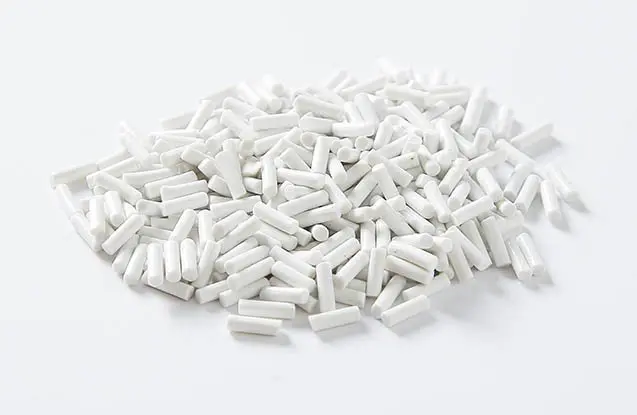
The cylinder shape of the ceramic media is good for deburring and burnishing of jewelry and casting parts made of brass.

The ceramic balls are the porcelain media that does not have any abrasive content and is very useful for cleaning and polishing brass parts.
Vibratory Finishing Compound
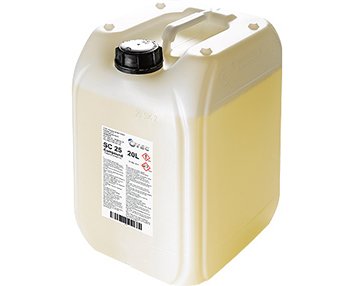
The grinding compound LC-13 is a mild grinding compound that helps to bring down the excess media wear rate and for lubrication.
The polishing compound HM-7C-A helps to create a mirror like shine on the brass parts.

The cleaning compound HX-0 helps to clean both brass parts and the media during the finishing process.

Mass Finishing Machines For Brass Parts
Inovatec machinery manufactures different types of mass finishing machines that are capable of handling brass parts for finishing. It supports processes like deburring, descaling, cleaning, surface smoothening, polishing, and drying. Inovatec also uses customized CAD designs to ensure that our machine will easily fit in your workspace.

- Ceramic tumbling media with fast action on brass parts
- Mass finishing machines that suit brass parts with ceramic media
- Supports a high level of machine automation
- Helps to attain right finish to brass parts
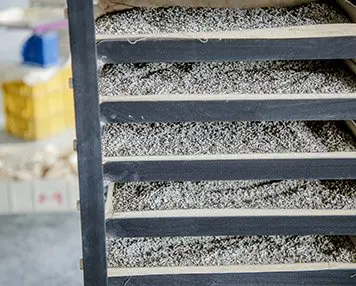
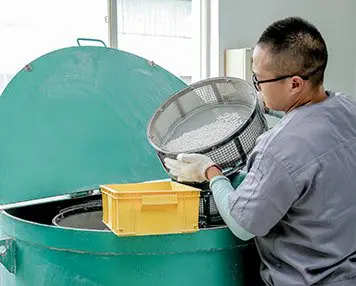
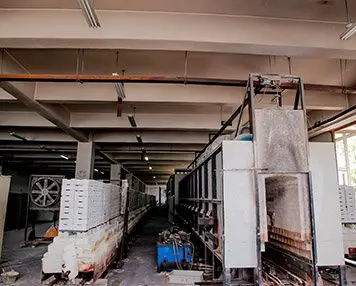
- Factory
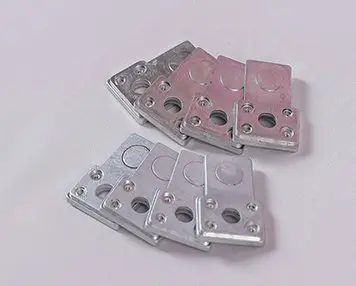
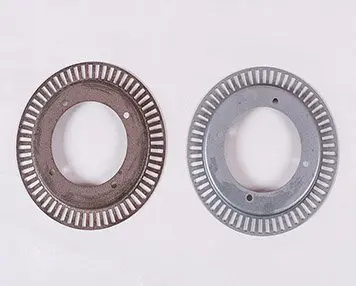
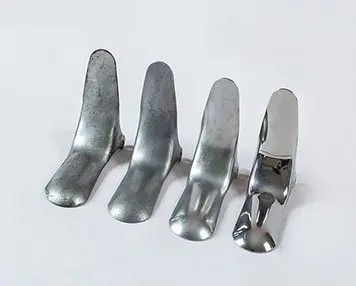
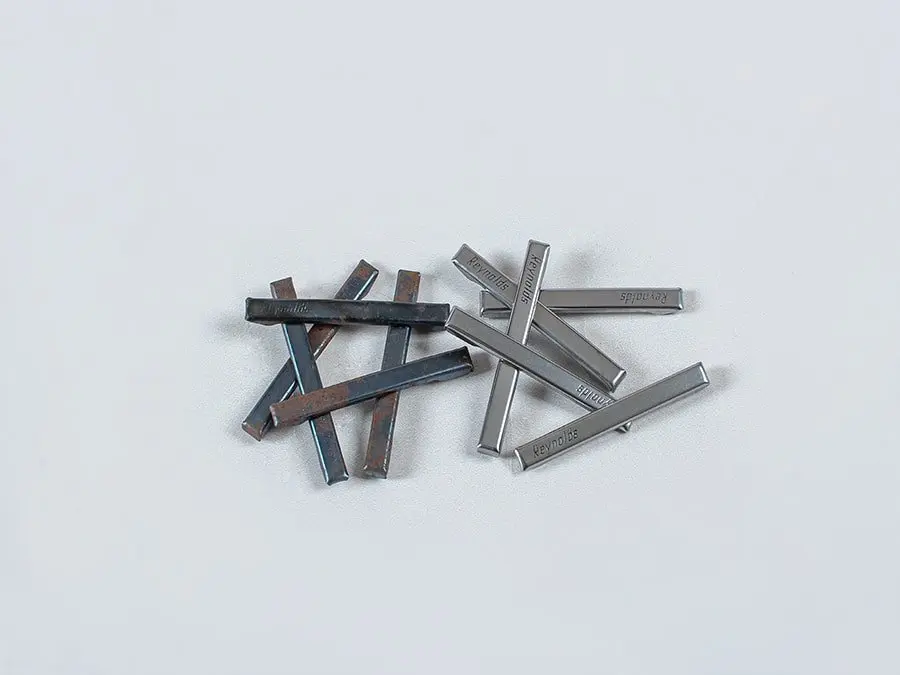
- Before and After

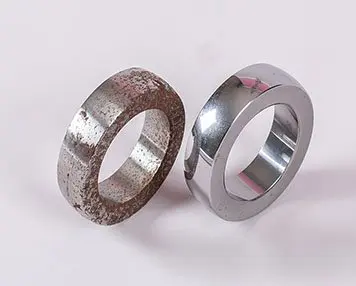
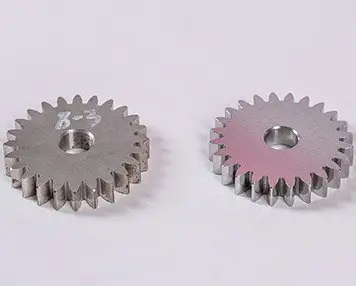
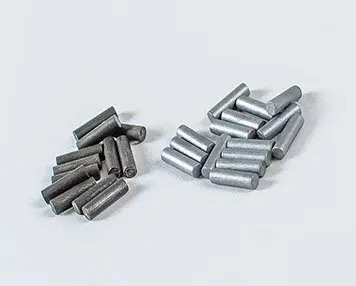
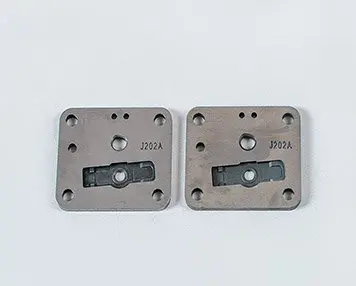
Our MOQ is 100 kg per size/shape. But we suggest 1000kg for better saving during the shipment.
Our production lead time is 15-25 days depending on the media type and size. Typically, smaller size media takes longer time to produce.
Of course. You can send us 2-3 pcs of tumbling media to analyze and we will make exactly the same media per your requirement. You can also send us your parts for free sample trials.
We make rigid packaging using double-layer plastic bags. 25kg per bags and 40 bags per pallets.
Of course. We choose the right tumbling media based on your parts size, shape and surface requirement. You can send us the parts with your expected surface finishing.
Ceramic Tumbling Media For Brass Introduction
Inovatec machinery manufactures a wide variety of ceramic tumbling media with varying abrasive content.
The ceramic deburring media with light cutting grade is a good alternative for the plastic media.
It is the perfect choice for light deburring and surface preparation for brass metal.
It is very useful to remove the dirt, grease, and the oxidation layer from the brass parts.

Although cleaning brass cases with vinegar is a cost-effective way for brass case cleaning.
The porcelain tumbling media is best suited for polishing the brass parts to bring the shine back on its surface.
It is commonly used for door and window parts, nuts and bolts, connectors and fittings, and bullet shells.
The vibratory tumbler finishing machines and the rotary barrel finishing machines are the recommend machines from Inovatec for cleaning and finishing of brass parts.
Inovatec also offers ceramic media in different shapes like a ball, triangle, and cylinder.
The same ceramic deburring media can be used for the bronze and copper parts also.
If you combine the ceramic tumbling media with the appropriate mass finishing machine, then it is an economical solution for finishing your parts.
Besides ceramic media, walnut shell media and corn cob media also do best for brass case polishing.
In this article we will answer:
- How to get shiny brass cases
- Best way to clean spent brass

You can get ceramic abrasive media in different shapes, abrasiveness, and sizes from Inovatec machinery.
The long life of the ceramic media from Inovatec also ensures that you can use it many times.
Thus, you will be able to save costs in the long run.
Inovatec machinery produces a wide variety of tumbling media.
So, you can easily get eh tumbling media matching with your part.

Ceramic Tumbling Media For Brass FAQ Guide
- 1. Which Tumbling Media IS Good For Cleaning Brass- Ceramic Media Or The Stainless Steel Media?
- 2. What Is The Typical Finishing Time For Ceramic Media When Tumbled With Brass Parts?
- 3. What Effect Does The Shape And Size Of The Ceramic Media Have When Tumbled With Brass Parts?
- 4. How Does The Ceramic Media Polish The Brass Parts?
- 5. What Advantages Do Ceramic Media Have Over Other Mass Finishing Media?
- 6. How To Clean Brass Casings With Ceramic Media Without Causing Any Damages?
- 7. Is It Possible To Dry Tumble Brass Parts With Ceramic Media?
- 8. Is It Possible To Reuse The Ceramic Media After Tumbling It With Brass Parts?
- 9. Is It Costly To Tumble Brass Parts With Ceramic Media?
1. Which Tumbling Media IS Good For Brass Tumbling Polish – Ceramic Media Or The Stainless Steel Media?
Using ceramic media to tumble brass parts can significantly improve surface brightness. Load the machine with ceramic media + brass parts + compound, run the cycle, and you’ll get cleaned, finished parts with minimal supervision.
The key is using the right amount of burnishing compound. If the compound is under-dosed, the media won’t stay properly wetted, which can lead to inconsistent cleaning and possible surface damage. Keep the media evenly wet throughout the process.
Stainless steel media can also clean and polish brass and is typically available as balls or pins, with very small diameters that can reach tight slots and reduce lodging risk. It may also allow magnetic separation (depending on the steel grade and manufacturing).
In most applications, ceramic media is preferred because it comes in many shapes and sizes, making it easier to match different brass part geometries. Both ceramic and stainless steel media can work well—choose based on part shape, lodging risk, and your finishing goal.
| Goal | Recommended Media Type | Shape | Cutting Level | Best Machine | Notes |
|---|---|---|---|---|---|
| Brightening / light polish | Porcelain / low-abrasive ceramic | Balls, cylinders | Low | Vibratory / Rotary | Uniform finish, lower risk |
| Light deburring | Light-cut ceramic | Small triangles, small cylinders | Low–Medium | Vibratory | Control time to avoid over-cut |
| Cleaning oils / light oxide | Low-abrasive ceramic + cleaning compound | Balls / cylinders | Low | Vibratory / Rotary | Compound & water level matter most |
| Edge radiusing | Light-cut ceramic | Triangles / wedges | Medium | Vibratory | Watch thin-wall deformation risk |
| Complex / scratch-sensitive parts | Porcelain / low-abrasive ceramic | Balls / rounded shapes | Low | Vibratory | Recommend sample testing first |

2. What Is The Typical Finishing Time For Ceramic Media When Tumbled With Brass Parts?
Typical finishing time is 2–4 hours with minimal supervision. Ceramic media is generally safe for brass, but over-processing wastes time and money, so aim to dial in the correct cycle time.
Cycle time depends on the machine’s aggressiveness (amplitude/energy) and the media cutting level. Aggressive ceramic deburring media removes material faster, so run the tumbler slow and gentle—high speed increases pressure and can over-cut brass.
Use a timer to keep every batch on the same duration, helping you maintain a consistent finish.
| Brass Part Type | Media:Parts Ratio | Water Level | Compound (Typical) | Time (Start) | Target Result |
|---|---|---|---|---|---|
| CNC brass parts (light burrs) | 3:1 | Medium (good circulation) | Cleaning + light polishing compound | 1–2 h | Remove light burrs, uniform surface |
| Brass fittings / valve bodies (complex geometry) | 4:1 | Slightly higher | Low-foam cleaning + brightening compound | 2–4 h | Brighten, reduce handling marks |
| Die-cast brass (more oxide / burrs) | 4:1 | Medium | Cleaning compound (often 2-stage) | 2–6 h | Clean + deburr |
| Decorative brass / jewelry | 2–3:1 | Higher (gentler) | Brightening / polishing compound | 1–3 h | More even brightness |
| Hole/slot parts (risk of lodging) | 2–3:1 | Higher | Cleaning compound | 1–2 h | Lower lodging / pinning risk |
3. What Effect Does The Shape And Size Of The Ceramic Media Have When Tumbled cleaning brass for reloading?
4. How Does The Ceramic Media Polish The Brass Parts?
Brass parts can be polished with ceramic media using either a rotary finisher or a vibratory tumbler—vibratory finishing is the most common choice. Because brass is relatively soft, wet tumbling is usually recommended.
Process (wet tumbling):
Load the bowl with brass parts + ceramic media + burnishing/polishing compound. Make sure the machine capacity can handle the total load, and run at about 75% bowl load for best circulation.
Set the cycle based on machine energy (amplitude). More powerful machines cut faster; if you’re using a more abrasive ceramic grade, run the machine slower/gentler to avoid excessive material removal.
Typical cycle time is 2–4 hours with minimal supervision. Longer cycles usually won’t harm brass, but they’re not cost-effective.
After finishing, unload and rinse thoroughly, then dry—air blow for holes/slots, towel dry, sun dry, or use an Inovatec dryer for faster results.
5. What Advantages Do Ceramic Media Have Over Other Mass Finishing Media?
Ceramic media is a popular choice for finishing brass because it comes in a wide range of shapes, sizes, and cutting levels, making it easy to match different part geometries and process goals. With the right selection, you can improve circulation, increase polishing efficiency, and achieve more consistent results.
Compared with softer media such as corn cob or plastic, ceramic media typically offers a longer service life and a higher cutting rate, so deburring brass can be faster and overall cycle time can be reduced. Because brass is a relatively soft metal, ceramic media removes burrs efficiently without requiring extreme machine energy.
Another practical benefit is cost: ceramic media is generally cost-effective, especially when you factor in its durability and reusability.
6. How To Clean Brass Casings With Ceramic Media Without Causing Any Damages?
Ceramic media can clean brass casings safely when you control two things: machine aggressiveness and burnishing compound dosage.
Load the tumbler with casings + ceramic media + burnishing compound, and keep the bowl at about 75% of its rated capacity for proper circulation. Use enough compound to fully wet the media so it rolls smoothly over the parts. Too little compound can lead to rubbing and poor results; too much reduces friction and slows the process.
You can run longer cycles if needed without damaging the casings, but avoid unnecessary time for cost efficiency.
After finishing, unload and rinse with clean water to remove compound residue and release any trapped media. Then dry completely before storage—either use an Inovatec dryer, or towel-dry first and follow with compressed air to clear water from holes and slots.
7. Is It Possible To Dry Tumble Brass Parts With Ceramic Media?
We don’t recommend dry tumbling (“hard tumbling”) brass with ceramic media. Ceramic is an aggressive, material-removing media, and without proper lubrication it can over-cut brass.
For brass, use wet tumbling with the right amount of burnishing compound to reduce friction and keep the load properly wetted. Too little compound increases rubbing; too much can reduce efficiency and may spill during operation.
Typical vibratory finishing time is 2–4 hours. Longer cycles usually won’t hurt quality, but they increase operating cost and accelerate media wear.
After finishing, unload, rinse, and dry:
Manual drying: towel first, then compressed air for holes/slots
Machine drying: load parts into an Inovatec dryer for fast, hands-free drying and clean output
8. Is It Possible To Reuse The Ceramic Media After Tumbling It With Brass Parts?
9. Is It Costly To Tumble Brass Parts With Ceramic Media?
With the right ceramic media (shape, size, and cutting level), finishing brass parts can be very cost-effective. Your total cost mainly depends on:
Cycle time (typically 2–4 hours on many Inovatec tumblers)
Burnishing compound consumption
Media purchase price and wear rate
Waste handling/disposal costs
Keeping the process within the optimal time window helps reduce operating cost, compound use, and unnecessary media wear.
Also note: the process generates waste that must be handled properly—do not discharge it into drains. Follow local environmental disposal procedures.
Ceramic media is reusable for years and can still work with minor wear. Media life varies by size and shape: larger media lasts longer, and balls/cylinders typically outlast sharper shapes like pyramids or tristar. Replace the media when it has worn down significantly in size.