20+ Years of Excellence
Since 2003, Inovatec Machinery has been at the forefront of surface finishing technology innovation.
Inovatec Machinery · Vibratory Finishing
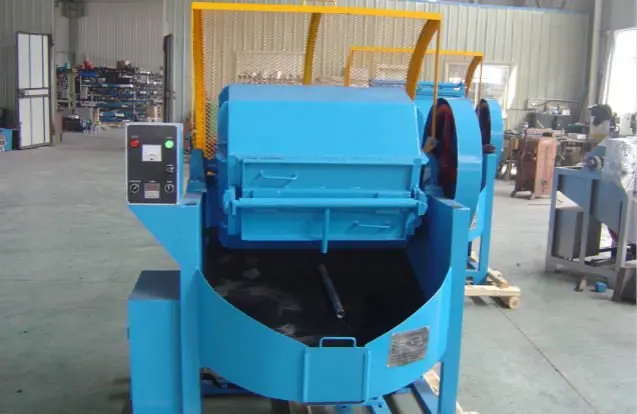
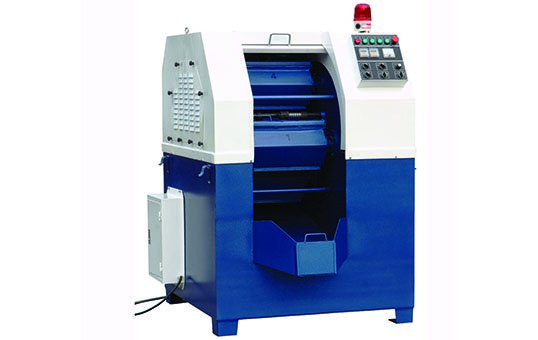
Inovatec’s Tilt Rotary Drum Polishing Machine give smooth surface finishes, fast deburring, and reliable results for every batch. Below is real performance data and before-and-after comparisons from our industrial customers.
Process Specs
Parts Material | Processing time (min) | Media Type | Media Wear Rate | Ra before | Ra after | Material Removal | Consistency | |
Stainless steel (304) | 60 minutes | Porcelain media Triangle 6X6 ACT | 0.35% per hour | 0.8 | 0.25 | < 0.25% | ±1% Surface Uniformity |
Consistent Results: The Tilt Rotary Drum Polishing Machine delivers uniform surface finish quality from batch to batch, ensuring stable and reliable results in production.
Low Damage Rate: With gentle tumbling action and a controlled tilt discharge design, the Tilt Rotary Drum Polishing Machine reduces part-to-part impact and helps protect small or delicate components.
High Repeatability: Digital controls and easy program settings help the Tilt Rotary Drum Polishing Machine maintain cycle-to-cycle consistency, typically within ±1% under the same processing conditions.
Real Industrial Testing: The Tilt Rotary Drum Polishing Machine is validated through 1,000+ finishing tests on different metals, part sizes, and geometries.
Process Tracking: Each Tilt Rotary Drum Polishing Machine can record cycle time, media type, and key process parameters for easier quality control and repeatable polishing results.
Detailed specifications for our IA Series tilt rotary barrel polisher machine. Compare models and download comprehensive technical documentation.
| Model | Capacity | Machine power | Rotation speed | PU lining | Net Weight | Dimension |
| IA | Liter | KW | rpm | mm | kg | (L*W*H)mm |
| IA-25 | 25 | 0.75 | 40 | 8-15mm | 150 | 1045x1050x1470 |
| IA-50 | 50 | 1.5 | 40 | 8-15mm | 250 | 1145x1050x1550 |
| IA-100 | 100 | 2.2 | 40 | 8-15mm | 350 | 1350x1050x1600 |
The IA series tilt rotary drum polishing machine uses the same rotational tumbling principle as standard horizontal barrel machines, with one structural difference: the barrel axis is inclined rather than horizontal. This tilt changes the tumbling pattern inside the barrel, creating a more complex cascading motion that improves media contact on all part surfaces. The three design elements below explain the practical outcome.
In a standard horizontal barrel, parts and media tumble in a simple end-over-end cascade. In the IA series, the tilted axis introduces an additional axial component to the tumbling motion — parts move both rotationally and along the barrel length simultaneously. This combined motion gives more complete media contact on concave surfaces, corners and internal features that a horizontal barrel leaves under-finished. The tilt angle also means the operator can observe the finishing process through a transparent viewing window without stopping the machine, which is not possible on a standard horizontal barrel.
The barrel interior is lined with 8–15 mm cast polyurethane throughout. PU lining protects parts from metal-on-metal contact with the barrel wall and reduces impact noise during operation. Three model sizes are available: IA-25 (25 L, 0.75 kW), IA-50 (50 L, 1.5 kW) and IA-100 (100 L, 2.2 kW). All three models run at 40 rpm — the correct speed for the barrel diameter to produce effective tumbling without parts centrifuging against the wall. The IA-25 suits small workshop batches and trial runs; the IA-100 handles medium production volumes of small-to-medium parts.
The IA series operates at the same low rotational speed and gentle tumbling action as the standard DM rotary barrel series. Part-to-part collision energy is significantly lower than vibratory finishing, making the tilt drum the correct choice for parts where vibratory action would cause denting or scratching: wardrobe accessories, decorative hardware, jewelry, acrylic parts and thin plastic components. Both wet finishing (water + compound + media) and dry polishing (walnut shell or corn cob + polishing paste) are supported in the same machine.
The IA series tilt rotary drum polishing machine is a gentle finishing machine suited for small to medium-sized parts where the low-energy rotational tumbling action is needed to avoid the surface damage risk of vibratory finishing. The tilted barrel is the key structural difference from a standard horizontal rotary barrel — the inclined axis creates a more complete tumbling motion that covers all part surfaces including corners and concave areas, while the transparent viewing window allows the operator to check part progress without stopping the cycle.
Choose the IA series when: parts are delicate, decorative or high-value; part-to-part collision from vibratory finishing is a concern; dry polishing with organic media is the process goal; or the batch size suits a 25–100 L barrel. For higher volume deburring where part protection is less critical, the DM series horizontal rotary barrel or VBS vibratory machines are more appropriate.
Now, this machine uses the same working principles as the rotary barrel finishing machine. You can have your barrel fitted an inner-lining to enhance the final finish and also to elongate the lifespan of your finishing barrel.
Here are some exciting facts about the tilt rotary drum finishing machine:
Fields That Best Suit Your Tilt Rotary Drum Finishing Machine
Watch our Surface finishing process in action. Learn more about our Surface finishing process technology.
Our mass finishing machine and tumbling media serve diverse industries with specialized finishing solutions for various materials and part types.
Engine components, transmission parts, brake systems
Turbine blades, landing gear, structural components
Fasteners, connectors, precision tools
Post-processing, surface refinement, finishing
Inovatec Machinery stands out as a trusted partner in surface finishing solutions, offering unmatched quality, innovation, and customer support.
Since 2003, we've been at the forefront of surface finishing technology, continuously innovating and improving our solutions based on real-world manufacturing needs.
We understand that every application is unique. Our engineering team works closely with you to design and configure machines that perfectly match your requirements.
With partners and service centers worldwide, we provide localized support and rapid response times regardless of your location.
We value your time. Our technical team responds to inquiries within 24 hours, ensuring you get the answers and support you need quickly.
Benefit from our expertise at no cost. We offer complimentary technical consultations to help you optimize your finishing processes and select the right equipment.
Over 500 satisfied customers across 50+ countries trust Inovatec for their surface finishing needs, with a 99% customer satisfaction rate.
Explore real applications by industry and scenario, with Before/After, sub‑categories and resources to help you quickly find what you need.
Jewelry | Precious Metals | Jewelry Polishing
Precision polishing, deburring and mirror finishing for gold, silver, copper and titanium jewelry—balancing premium surface quality with throughput.
Burrs on edges, surface scratches and oxidation spots reduce luster and wearing comfort.
Noticeably improved mirror gloss with rounded edges and better wearing comfort.
Additive Manufacturing | SLA/SLS/FDM
Removes layer lines, densifies surfaces and unifies appearance for 3D‑printed parts across materials and processes.
Pronounced layer lines, support marks and rough surface affect assembly and appearance.
Smooth, refined surface ready for painting/electroplating; presentation‑grade look.
Sheet Metal | Laser Cutting | Edge Optimization
Removes dross/burrs and adds edge radiusing on laser‑cut parts to improve safety and assembly quality.
Sharp, burred edges can cause cuts and hinder coating adhesion.
Consistent rounded edges and clean surfaces for better paint/e‑coat adhesion.
Consumer Electronics | Small Appliances | Exterior Parts
Delivers consistent texture and feel for high‑volume consumer products, improving brand perception and yields.
Uneven brushing, micro‑burrs and harsh feel affect assembly and user experience.
Uniform texture, smooth edges and refined touch; markedly better consistency.
Stone | Gemstone | Tumbling
Rounds edges and enhances gloss on natural/synthetic stones for jewelry and decorative crafts.
Sharp edges, rough surfaces and uneven color/reflection.
Rounded edges and even polish; improved visual appeal.
Automotive | Engine/Drivetrain | High‑volume Consistency
Deburring, edge radiusing and surface consistency for automotive parts to meet stringent standards.
Tool marks and residual burrs with sharp edges reduce fatigue strength and hinder assembly.
Stable edge radii and compliant roughness with high repeatability.
Defense | High Reliability | Process Consistency
High‑reliability, consistent surface finishing across metals and composites.
Sharp edges, stress concentrations and surface defects impact durability and safety.
Consistent chamfers and stable surface quality; coating/assembly‑ready.
Aluminum Profiles | Die‑cast Parts | High‑volume Finishing
Efficient, consistent finishing for aluminum parts; ideal for pre‑anodizing treatment and brushed/polished appearance.
Gate/flash marks and dull surfaces; notable batch variation.
Flash removed with refined texture and higher brightness; improved batch consistency.
Engineering Plastics | Injection‑molded Parts | Deflashing
Removes plastic flash and smooths edges to prevent scratching and improve assembly.
Visible flash and sharp edges affect feel and assembly.
Flash removed and corners smoothed; improved look and feel.
Enhance your mass finishing machine and tumbling media with our professional-grade accessories. Increase efficiency, reduce noise, and optimize your finishing process.

Get the most out of your mass finishing machine and tumbling media with our comprehensive accessory package. Our experts will help you select the right combination of accessories for your specific application needs.
Accessories designed to maximize machine efficiency and output quality
Reduce operational costs through improved efficiency and reduced waste
All accessories designed for seamless integration with your existing machine
Inovatec Machinery is committed to the highest standards of quality, safety, and reliability.
Quality Management System certified by international standards, ensuring consistent product quality.
European Conformity marking ensuring our machines meet EU safety standards.
Comprehensive testing and inspection reports from SGS.
Environmental protection standards compliance.
Since 2003, Inovatec Machinery has been at the forefront of surface finishing technology innovation.
Our machines are trusted by manufacturers worldwide and recognized at major industry exhibitions.
Regular participation in major industry exhibitions worldwide.
Strategic partnerships across major manufacturing regions.
Find answers to common questions about our products.
A tilt rotary barrel polishing machine is a tumbling-type mass finishing machine with a barrel that rotates on a horizontal axis and can tilt for easy loading and unloading. Parts, media, water, and compound are put in the barrel; as it rotates, the media gently rubs against the parts to deburr, radius edges, and polish surfaces. The tilt function allows you to quickly discharge the finished parts and media into a screen or separator, improving ergonomics and reducing manual handling.
Tilt rotary barrel machines are suitable for small to medium-sized parts made of steel, stainless steel, aluminum, zinc, brass, copper, and many plastic components. They are widely used for deburring, descaling, edge rounding, and polishing of castings, stampings, machined parts, and 3D-printed components. Because the process is relatively gentle and controllable, it also works well for delicate parts that cannot withstand aggressive impact.
Compared with vibratory machines, tilt rotary barrels generally provide a more intensive sliding action and can deliver smoother surface finishes, especially on complex geometries. However, the cycle times can be longer than vibratory finishing for heavy deburring jobs. The tilt rotary design offers easier unloading than traditional barrel tumblers and is usually quieter than large open vibratory bowls, making it suitable for smaller workshops or noise-sensitive environments.
As a general rule, the barrel is loaded to about 60–80% of its volume with a mix of parts and media, ensuring enough space for proper tumbling action. Overloading reduces efficiency and can damage parts or the barrel lining. Typical cycle times range from 30 minutes to several hours, depending on the material, burr size, and required surface finish. For critical applications, you should run trials to find the optimal time window.
Daily maintenance mainly includes checking the polyurethane or rubber lining for wear, making sure the barrel cover and seals are intact, and inspecting the drive system (motor, belts, chains, or gearbox) for abnormal noise or vibration. You should also verify that the tilt mechanism and locking devices move smoothly and safely, and remove any sludge build-up inside the barrel. Regularly cleaning the machine and using the correct compound concentration will extend the lining and media life and keep the finishing result stable.m
Both machines use slow rotational tumbling — parts and media rotate together in a PU-lined barrel at low rpm — which is gentler than vibratory finishing and produces lower part-to-part collision energy. The difference is the barrel axis orientation.
In a standard horizontal barrel (DM series), the axis is horizontal and parts tumble in a simple end-over-end cascade. In the IA series, the barrel axis is tilted, which introduces an axial movement component — parts move both rotationally and along the barrel length during the cycle. This gives more complete media contact on complex surface geometry.
A second practical difference: the IA series has a transparent viewing window that allows the operator to observe and check parts during the cycle without stopping the machine. Standard horizontal barrels require stopping and opening the barrel to inspect.
For most standard deburring and polishing applications, both machines produce similar results. The IA is preferred when: part geometry is complex and media reach is a concern; process visibility is important; or the slightly more complex tumbling motion improves surface coverage on specific part types.
The IA series supports the same media types as the standard DM horizontal barrel range.
For wet finishing (deburring, edge rounding, cleaning): ceramic tumbling media with water and compound is the standard choice for metal parts. Plastic media with compound suits softer metals (aluminum, brass, zinc die-cast) and plastic parts where ceramic would be too aggressive.
For dry polishing (final brightening and shine): walnut shell grit with polishing paste is the standard combination for jewelry and decorative hardware. Corn cob granules with paste are used for light cleaning and drying of small metal parts.
Load ratio: fill the barrel 40–50% with media, add parts to bring the total load to 60–70% of barrel volume. Overfilling prevents proper tumbling; underfilling allows excessive part-to-part contact. For dry polishing, the paste is added to the media and parts together at the start of the cycle — no water is used.
Ready to improve your finishing process? Contact our experts for a personalized quote and technical consultation.
Fill out the form below and our team will contact you within 24 hours.
Prefer to contact us directly? Choose your preferred method.
Ready to experience the Inovatec difference? Contact our team for personalized solutions.
399# Shushan Road, Wuxing District, Huzhou City, Zhejiang Province, 313000 China
6317 Arcadia St, Eastvale, CA 92880 USA (323-577-3309)
Read reviews and see our business information on Google.
View Google Business