 English
 Español
 Français

Struggling with rough, inconsistent edges on your plastic parts? This common manufacturing headache slows down production and compromises quality. I’ll show you how to solve it with a precise, automated process.
The best way to achieve perfect plastic deburring is by using a vibratory finishing machine with the correct media. The key is to select a media, like a light-cutting ceramic, that is aggressive enough to round edges but gentle enough to protect the part’s primary surface.
Every finishing project presents a unique puzzle. A solution that works for a steel gear might completely destroy a delicate plastic component. It’s all about understanding the material, the desired finish, and the specific challenges of the part. I was reminded of this recently when a customer came to us with a very particular problem. This story perfectly illustrates how a tailored approach is the only way to achieve true precision in mass finishing. Let’s dive into the challenge my customer, Anton, brought to our workshop.
What Finishing Challenges Did Anton Face with His Plastic Parts?
Anton had a big problem with his plastic belts. The sharp edges made them unsafe and unusable for their final application. He needed a fast, reliable way to fix this.
His main challenge was rounding the sharp edges of his plastic belts without scratching or roughening the main surface. He also needed the entire process to be completed in under an hour. This required a very specific and balanced finishing recipe to meet his production demands.
When Anton, a customer from Russia, first showed me his plastic belt samples, I immediately understood the difficulty. The material was a durable polymer, but it was also surprisingly sensitive to abrasion. Any aggressive action would leave scuffs and marks on the flat surface, which was completely unacceptable for his product’s final look and feel. He explained that manual deburring was too slow and produced inconsistent results from one part to the next. He needed an automated process that was both fast and gentle. This is a classic mass finishing dilemma. We needed a process that could differentiate between an edge and a surface. The media had to be smart enough to cut the high points (the edges) while gliding smoothly over the low points (the flat surface).
 Plastic parts before and after vibratory deburring
Here’s a breakdown of his strict requirements:
| Requirement | Challenge |
|---|---|
| Perfectly Rounded Edges | Finding a media with enough cutting power. |
| Pristine, Smooth Surface | Avoiding media that would scratch or haze the plastic. |
| Cycle Time < 60 Minutes | The process had to be aggressive enough to work quickly. |
The problem was clear. A gentle media would protect the surface but fail to round the edges in time. An aggressive media would round the edges but destroy the surface. We had to find something right in the middle.
How Did We Find the Right Media for Anton’s Plastic Belt Deburring?
Finding the perfect media was a puzzle. The wrong choice could easily ruin Anton’s entire batch of parts. We needed a fast and effective solution he could count on.
Top Plastic Deburring Techniques
The market offers a range of plastic deburring equipment, from mechanical to electrochemical and thermal varieties. Each has unique capabilities, and choosing the right one depends on specific application needs.
We suggested and ultimately chose a light-cutting ceramic media. Our tests with other types, like plastic and porcelain media, showed they were either too slow or too gentle. The light-cutting ceramic media provided the perfect balance, effectively rounding the edges while preserving the part’s smooth surface.
 Tumbling Media
Our process for solving problems like Anton’s is systematic. We don’t just guess. We test. My team and I gathered samples of his plastic belts and prepared our lab-sized vibratory finisher. We decided to test three main categories of media we thought might work: plastic, porcelain, and ceramic. First, we tried a plastic media. As expected, it was very gentle. After an hour in the machine, the surface of the belt was perfect, but the sharp edges were still there. It just didn’t have the cutting power. Next, we moved to a porcelain media, which is excellent for polishing. Again, it was too mild. It burnished the surface to a nice sheen but did nothing to round the edges.
It was clear we needed some abrasive action. So, we tried a standard-cutting ceramic media. This was a step in the right direction, as it quickly started rounding the edges. However, after just 30 minutes, we could see fine scratches appearing on the flat surface of the belt. This was the exact problem Anton wanted to avoid. This is when we turned to one of our specialized products: a light-cutting ceramic media. This media is designed with a milder abrasive grit. It’s strong enough to act on the high-pressure points of a part, like sharp edges, but gentle enough to flow over large, flat surfaces without causing damage. The results were immediate and exactly what we were looking for.
| Media Type | Edge Rounding time | Surface Finish | Result |
|---|---|---|---|
| Plastic Media 10X10 Cone 600# | 2 hours | Good | Success + Long time |
| Porcelain Media 15X15 ACT | 5 hours | Excellent | Success + Long time |
| Ceramic Media 15X15 GC ACT | 30 minutes | Poor | Fail |
| Light-Cutting Ceramic Media 15X15 ACT | 1 hour | Good | Success |
What Was the Final Outcome of the Finishing Process?
Anton was waiting for a solution that met all his strict requirements. Failure was not an option, as it would mean a return to slow and costly manual labor for him.
The outcome was a complete success. Using the light-cutting ceramic media, the plastic belts came out with perfectly rounded, smooth edges and no damage to the surface. We achieved this result consistently and well within Anton’s one-hour time limit, giving him a reliable process.
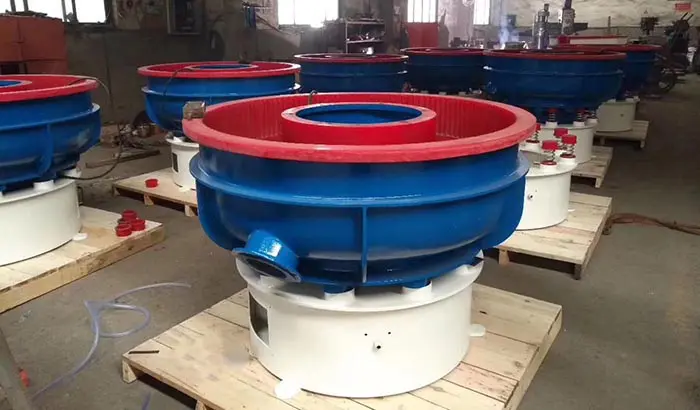
The transformation was remarkable. The “before” parts had sharp, potentially hazardous edges left over from the molding process. The “after” parts felt smooth and looked professionally finished. Every single belt that came out of the vibratory finisher was identical, which is the level of consistency that manufacturing demands. We documented the entire process for Anton, including the machine settings, the exact media specification, and the cycle time. This gave him a repeatable “recipe” he could implement in his own facility to get the same perfect result every time.
The impact on his business was significant. He was able to increase his production throughput dramatically because the finishing process was no longer a bottleneck. The quality of his product improved, leading to greater customer satisfaction. Furthermore, by automating the process, he reduced the labor costs associated with manual deburring. This case is a great example of how a very specific problem can be solved with the right application of mass finishing science. The principles we used for Anton’s plastic belts can be applied to countless other components across industries, from automotive interior parts to electronic housings and medical device components. It all comes down to finding that perfect balance.
Conclusion
With the right expertise, even challenging plastic deburring is achievable. We deliver precise, efficient, and repeatable finishing solutions to meet any manufacturing need you might have.
Related Readings:
- Understanding Vibratory Finishing (Media) — Production Machining
- What Is Deburring? (Process Basics + Burr Types)
- What Are the Different Types of Burrs?
- Tumbling Media for Plastic Parts (Best Media Options)
- Tumbling Media for Vibratory Deburring Machines (Selection Guide)
- Deburring Media (Ceramic/Plastic/More + Use Cases)