 English
 Español
 Français
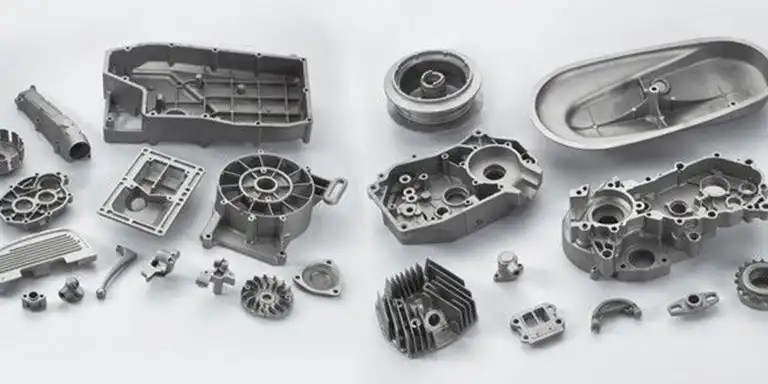
In this article, we will discuss a case for Magnesium Automotive Parts surface deburring. This automotive part is made from magnesium alloy (specific gravity 1.80).
It has the advantage of high strength, a large modulus of elasticity, good heat dissipation, good shock absorption, and more significant impact load capacity than aluminum alloy.
These prominent characters made it famous in automotive components.
1. Parts condition before finishing
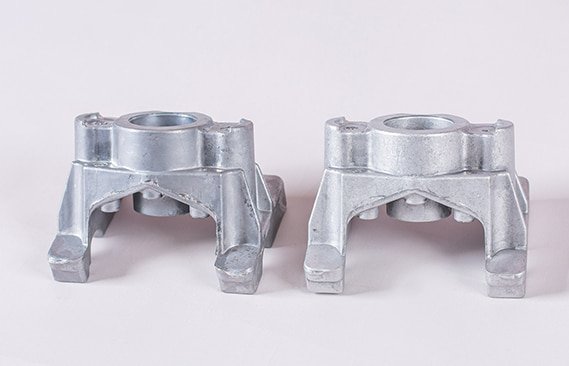 | Material: Magnesium alloy Appearance: The part’s surface is silver in color before tumbling. Some area is smooth feeling, while some other place is horny. No big burr or scale is observed with the naked eye. Shape: This part has a complex geometry. So we need to choose the right size media that not lodge in holes or recess. Size: 108X78mm Process before finishing: Die Casting Process after finishing: Electro Plating |
2. Parts Surface requirement
- Smoothing parts surface without damage parts
- Remove the molding line from the die casting process
- Remove the burr and oxidation layer
- Reduce parts roughness
3. How we process the parts
| Step | (1) Grinding | (2) Drying |
| Machine | Vibratory Finishing Machine (without separation) | Conveyor dryer or natural drying or oven |
| Tumbling Speed | 50/60HZ (full speed) | |
| Chip Type | Plastic Media TET/Cone Middle cutting | |
| Media to Parts Ratio | 6:1 | |
| Compound Type | LC-13, PH 8 (mild grinding compound) | |
| Water Level | Just cover the mass | |
| Tumble Time | 1 Hour | 30 minutes |
| Notes— | Manually take the parts out of the machine, and rinse them | Absorb water content and clean part surface |
4. Parts condition before and after polishing
Magnesium parts before and after deburring 1
After the vibratory tumbling process, you can see the dark layer removed. The magnesium alloy surface formed a matte texture.

You can also find the mold line is ground off, and the part’s edge is rounded. So the parts are easy to handle and assemble for operators. In addition, parts finished with plastic media have a lower surface Ra value, which means more downward friction force.
5. Other considerations
Usually, the automotive manufacturer has a very colossal production volume every day. They want to achieve the most possible automation level.
For the significant size component, sometimes we should balance between productivity and surface quality.
The Magnesium Automotive Parts Parts are heavy, so parts on media ratio need to consider. These parts can also finish with a centrifugal disc finishing machine.
In that case, the rotational speed has to be lower to prevent damage.

The size of the media should choose carefully. Small size media is likely to lodge into parts hole and recess.

To prevent the lodging issue, we have to sieve out the undersized media after the process. In the fully automatic finishing machine or continuous flow-Thu vibratory finishing system, we can design a double layer sieve to collect little media, right size media, and finished parts in the same step.
6. Conclusion
In this article, we discuss a case study of magnesium parts finished with plastic media. This process can also be used for aluminum parts because they are soft metal by nature.
Firstly, we discuss the condition of the parts before finishing.
Secondly, we show parts surface requirements from clients. Thirdly, we offer the process that we did for the magnesium parts in detail.
Later, we compare the surface before and after mass finishing. At last, we discuss other possibilities for magnesium parts, deburring, and smoothing.
If you love any other content or topic, just let me know. We prepare a complete guideline for you.
If you have any parts to finish, please also send them to us for the finish, we will polish them and send them back to you for inspection.